
The National Wealth Fund has made an equity investment in two big battery storage projects in Scotland, at Eccles and Kilmarnock, alongside the developer Matrix Renewables. Together they add up to 1GW of power and 2GWh of storage. Construction has started at Eccles, which is due to run from October 2027, and Kilmarnock follows from December 2026. Modern Power Systems reported the deal on 20 November 2026. Nothing is compulsory for businesses, but batteries in Scotland go straight at one of the biggest costs on the grid right now.
The cold hard facts
- Who: the National Wealth Fund, owned by HM Treasury, investing alongside Matrix Renewables UK. Matrix keeps a majority stake in both projects.
- What: two battery energy storage sites, 1GW and 2GWh between them.
- Where: Eccles and Kilmarnock, “strategically located along key transmission corridors between Scotland and England”, the fund says.
- When: Eccles is under construction, with commercial operation expected in October 2027. Kilmarnock construction is expected to start in December 2026, with operation targeted for September 2028.
- Jobs: “more than 200 jobs expected to be created or supported” through construction and operation.
- Scale: storage equivalent to the annual electricity use of “around 520,000 households”, the fund says.
- Investment amount: not given in either source we read.
Why Scotland, and why batteries
The fund says the sites will help with “enhancing grid flexibility, managing network constraints and enabling greater integration of renewable energy.”
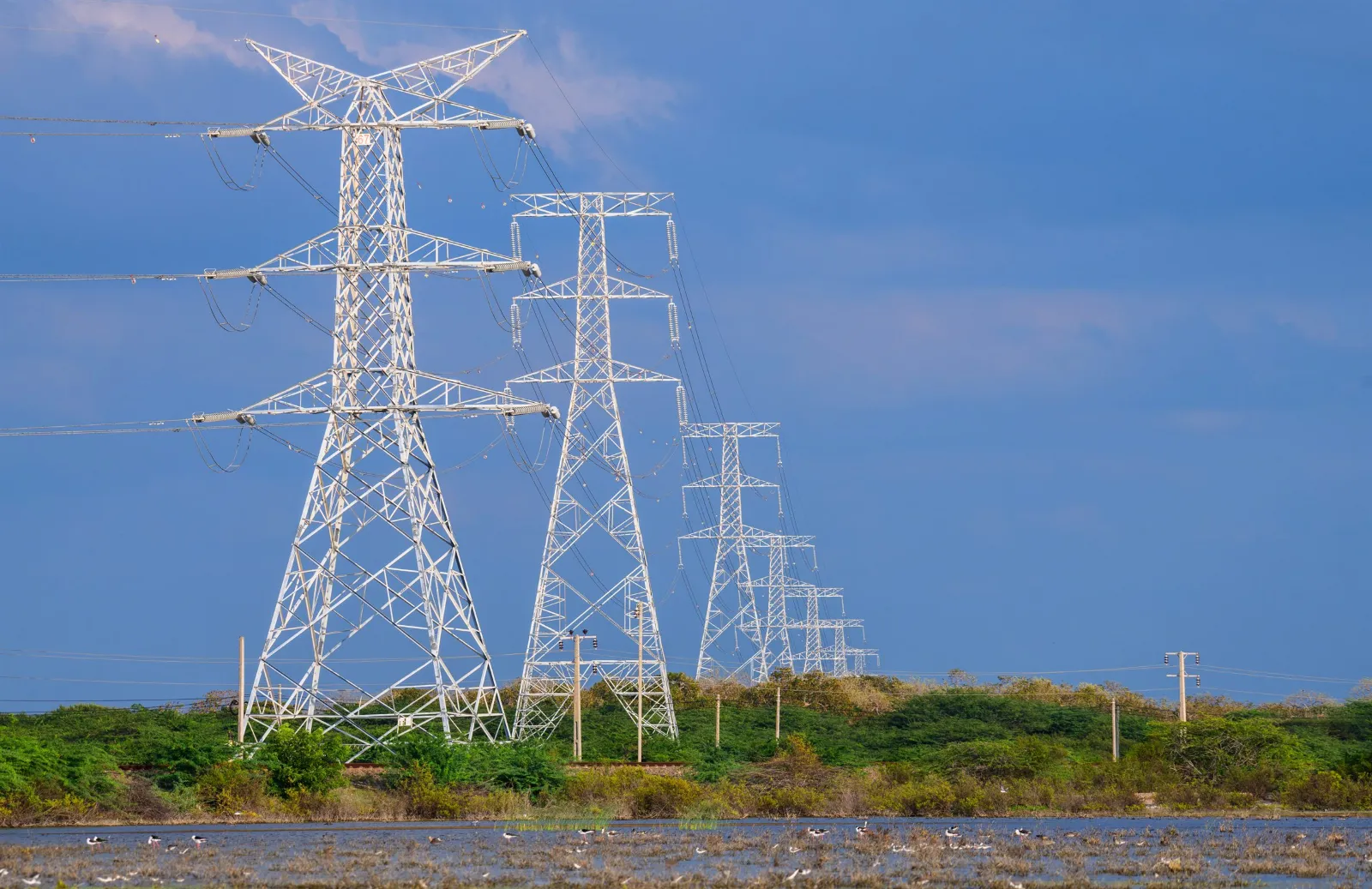
Our take: that’s the key line. On 26 November we reported that grid balancing costs hit a record £553m in September, mostly because wind power in Scotland couldn’t be moved south. Batteries placed on the Scotland to England routes can soak up power that would otherwise be turned off, and release it when the lines have room.
Climate minister Katie White said: “Battery storage projects are essential for capturing and storing the vast amount of wind power being generated across Scotland.”
What the investors say
Oliver Holbourn, chief executive of the National Wealth Fund, said: “Battery storage is critical to building a cleaner, more secure and more flexible energy system.”
Matrix chief executive Luis Sabaté said, as reported by Modern Power Systems, that these are “Matrix Renewables’ first investments in the UK” and that the company “is planning further multi-gigawatt investment in storage and flexible generation”.
Exchequer Secretary Dan Tomlinson said the investment “will support hundreds of jobs in Eccles and Kilmarnock”.
The questions worth asking
- How much public money? Neither the fund nor Modern Power Systems states the size of the investment.
- Whose batteries? The suppliers haven’t been named. We looked at how many shortlisted UK storage projects use China-linked batteries.
- Will it cut constraint costs? The sources say the projects will help manage constraints, but give no figure for savings.
- Does it bring bills down? Katie White says projects like this help “get bills down for good”. No estimate has been published.
What does this mean for your business?
- Constraint costs are in your bill. On most business contracts, balancing and network charges sit in the non-commodity part of the price. Our take: every gigawatt of storage that helps the grid move Scottish wind is welcome, and should help keep those costs lower in the long run. Our guide to non-commodity costs explains them.
- The savings come later. Eccles runs from late 2027 and Kilmarnock from late 2028. Ask us how your contract treats non-commodity costs between now and then.
- Could a battery work on your site? Large batteries earn by shifting power to when it’s needed. Smaller ones can do the same for a business with the right usage pattern. Talk to us about whether on-site storage makes sense for you.
- Sort the contract early. Arrange your business electricity contract as far ahead as you can, so you’re choosing with time on your side.
Talk to our energy experts
Want to know how much of your bill is grid and balancing costs? Book an appointment with our team, get a quote, or call us on 01273 914000.