
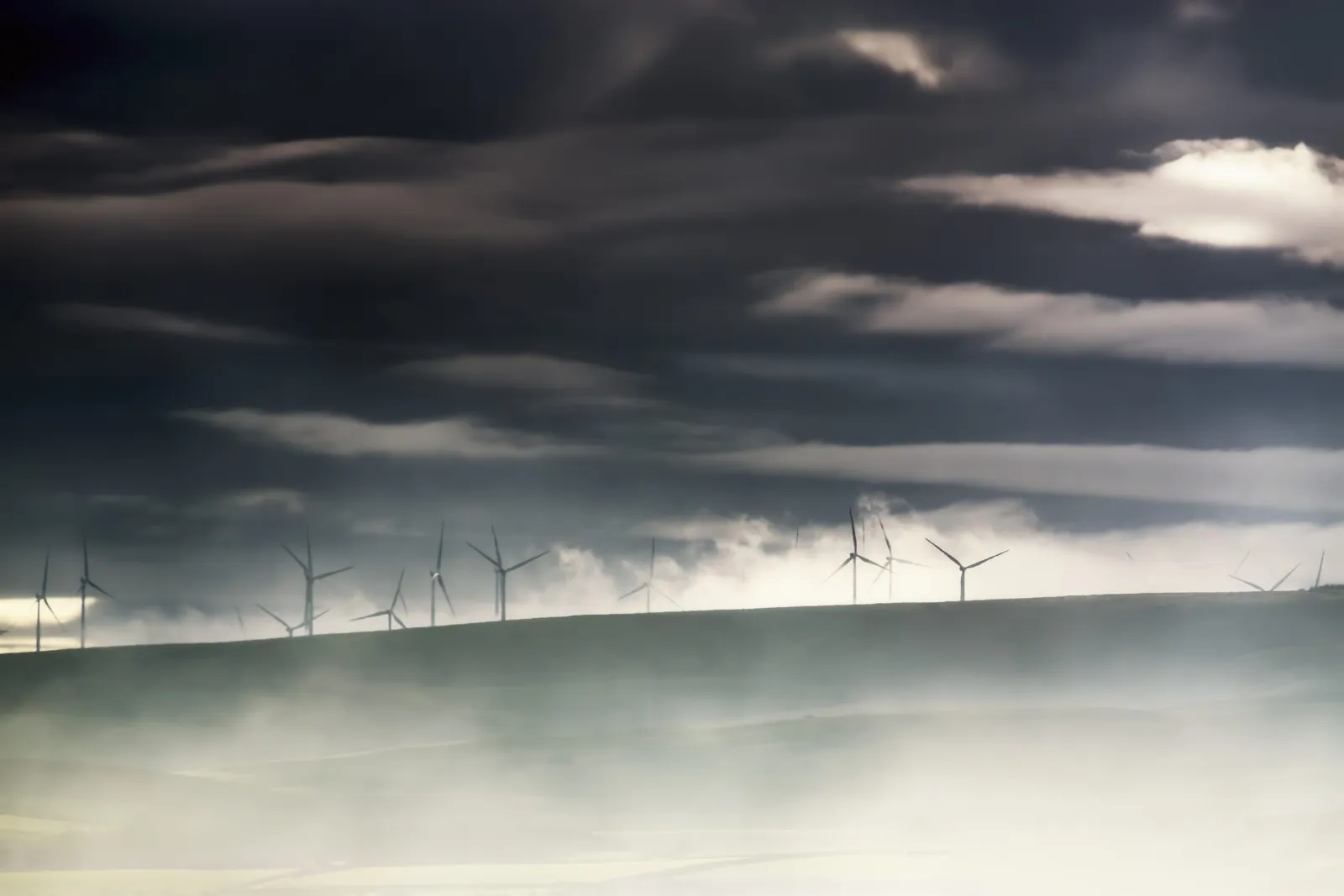
A Danish fund manager is investing about £800 million in two giant batteries at Coalburn in South Lanarkshire, The Herald reported on Wednesday 25 November 2026. Copenhagen Infrastructure Partners says the first, Coalburn 1, is “Europe’s largest operational battery energy storage system”. It began commercial operation in August 2026 and the second is being built. The batteries store wind power that would otherwise go to waste and release it when demand is highest. No electricity price changes because of this, but the cost of switching off wind farms is shared across electricity bills, business ones included.
The facts
- Who: Copenhagen Infrastructure Partners, known as CIP, a Danish fund manager. It is investing through its flagship fund.
- Where: Coalburn, South Lanarkshire, in southern Scotland. The Herald’s headline describes the site as a coalmine. Its report gives no more detail on the site’s past.
- What: two batteries of 500MW each, called Coalburn 1 and Coalburn 2.
- Type: Coalburn 1 is a two-hour lithium-ion battery, CIP said in August.
- Cost: around £800 million for the two.
- Timeline: Coalburn 1 entered commercial operation in August 2026. Coalburn 2 is under construction. The reports give no finish date for it.
- Jobs: the contractor H&MV says building the first battery “has supported 60 permanent roles in Scotland across engineering, project management and specialist trades”.
- Connection: transmission-connected, CIP says.
How big is it?
On our own maths, a 500MW two-hour battery holds 1 GWh of electricity, which is a million kilowatt hours. If Coalburn 2 is built to the same two-hour design, the pair would hold 2 GWh. The reports confirm the two-hour figure for Coalburn 1 only.
CIP has two more battery projects in Scotland, at Devilla and Kilmarnock South. The Herald reports that the four together “are expected to provide 4.4GWh of storage once fully commissioned, almost a third of Great Britain’s operational battery storage today”.
On our own maths, £800 million for 1,000MW of batteries is £800,000 for each megawatt.
What the batteries do
The Herald puts it in one line: the batteries “store surplus wind power and release it to the grid when demand is highest, so less clean energy goes to waste”.
That waste has a price. When wind farms produce more than the grid can carry, they are turned down, and the cost is shared across electricity bills. We explained how that works on 24 November 2026 in Green hydrogen plant approved beside old nuclear site, and looked at another way of fitting more power down existing lines in Drone fits sensors to live power line in UK first.
Nischal Agarwal, a partner at CIP, said in August that Coalburn 1 “will enhance the flexibility and resilience of the UK electricity system, support the integration of more renewable power, and contribute to lowering costs for consumers”.
Why the government is talking about it now
The battery has been running since August. It is in the news because a Foreign Office minister, Lord Wood, is in Copenhagen meeting Danish ministers and businesses. He said: “Projects like this will help lower power costs, strengthen our energy security and reduce our reliance on imports, while backing jobs and industry in Scotland.”
The Herald reports that UK diplomats in Denmark and the UK Government’s Office for Investment worked with CIP on its plans, alongside the Scottish Government, and that CIP “now has a pipeline representing more than £40 billion of potential clean-energy investment across the UK”.
We covered another battery project on 19 November 2026 in 200MW battery site approved on Bexley green belt.
The questions worth asking
- How much will it save? Both the minister and CIP say batteries like this lower costs. Neither report puts a figure on it.
- When does Coalburn 2 switch on? Not stated.
- Is two hours enough? At full power the battery is empty after two hours. The reports don’t discuss longer storage.
- How does the battery earn its money? Not covered in either report.
- What was on the site before? The headline says a coalmine. We’d like to know more.
What does this mean for your business?
- This is the sort of project we welcome. Our take: every unit of wind power stored and used is one that bill payers aren’t paying to switch off. That helps keep the grid part of your bill lower over the long term.
- It doesn’t lower the price you are offered now. Your next contract is priced on the market on the day you agree it. Arrange it as far ahead as you can, and we’ll put business electricity prices from suitable suppliers in front of you.
- When you use power matters. Our take: a battery that fills up on surplus wind and empties when demand is highest shows that the time of day counts. Send us your bills and we’ll go through with you how much electricity you use and when you use it.
- Know what’s in your bill. The cost of managing the grid sits inside your electricity price. Send us a recent bill or quote and we’ll go through with you which parts are fixed and which can move.
Talk to our energy experts
Want your electricity contract arranged well ahead, with someone to explain what’s in the price? Book an appointment with our Energy Team, get a quote, or call us on 01273 914000.