
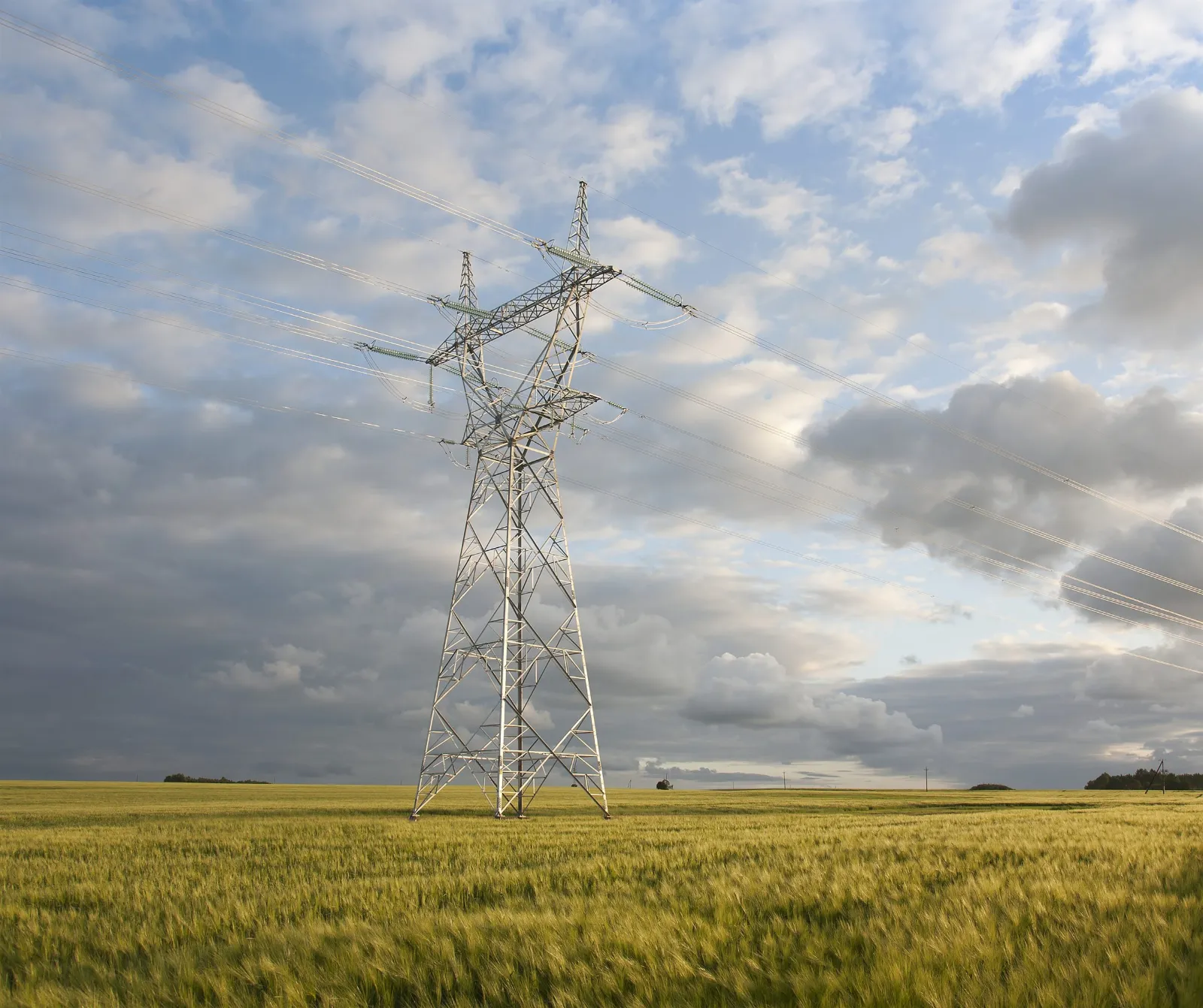
Northern Ireland’s High Court refused a campaign group permission to bring a new legal challenge against the North-South Interconnector on Monday 23 November 2026. Mr Justice McAlinden dismissed the application by Fergal Woods and Safe Electricity A&T Ltd in the King’s Bench Division of the High Court of Justice in Northern Ireland. The ruling changes no price and places no duty on any business. It matters because this line is the grid upgrade that SONI says would cut what Northern Ireland pays for electricity.
The facts
- The court: the High Court of Justice in Northern Ireland, King’s Bench Division (Judicial Review). The judgment is published as [2026] NIKB 65.
- The judge: Mr Justice McAlinden.
- Who brought it: Fergal Woods and Safe Electricity A&T Ltd, who in the judge’s words “are resolutely opposed to the building” of the line.
- Who they challenged: the Department for Infrastructure. SONI, NIE Networks and the Department for the Economy also took part.
- The result: “The application for leave is therefore dismissed with no order as to costs.”
- The project: a new 400 kV overhead line from a substation at Turleenan in County Tyrone, through County Armagh and into counties Monaghan, Cavan and Meath.
- Length and cost: a 138km route costing €350 million (£308 million), the BBC reported on 2 November 2025. On our own maths that is about £2.2 million a kilometre, or roughly £2,200 a metre.
- Timeline: first proposed in 2006, planning permission granted on 14 September 2020, and “now not expected to be completed until 2031”, the BBC reported on 2 November 2025.
- Pylons: more than 100 new pylons in Northern Ireland, with six under construction at that date.
- Jobs: none of the sources we read gives a jobs figure.
What the case was about
This was not a challenge to the planning permission. That was tested in an earlier judicial review by the same applicants, which the High Court dismissed in a judgment reported in 2021 and the Court of Appeal upheld in one reported in 2022. The judge called the permissions “now unchallengeable”.
The new case was about two pre-commencement conditions on planting and woodland. They require plans to replant hedges and restore land worked on while the pylons go up. The Department for Infrastructure signed both off on 31 July 2025.
The applicants said the department relied on environmental information that was out of date. The Environmental Statement was last updated in 2019. Since then, they argued, new homes have been built along the route, access routes have changed and land use has changed, so fresh information should have been asked for.
The judgment also records some history that went the campaigners’ way. An earlier challenge to the first planting plan was heard between April and August 2025. During it, the judge says, “it became apparent that the landscaping plan was, indeed, less than satisfactory”. NIE Networks submitted a better one, the department made a fresh decision, and the first case ended by agreement with the department paying the applicants’ costs.
Why the judge said no
The department and the network companies argued the case was “unarguable with no realistic prospect of success”. The judge refused leave. The judgment gives these reasons.
- The law leaves the call to the department. Whether environmental information is adequate is for the decision-maker to judge, and a court can only step in if that judgment is irrational.
- The applicants’ own expert didn’t go far enough. The hearing was adjourned so they could get an expert report. It was a desktop review with no site visits, and it said the changes “reasonably raise questions”. The judge said the report and its qualified wording “for all intents and purposes dispose of this leave application”.
- The changes on the ground had been looked at. NIE Networks used April 2025 mapping, flew a drone survey over six days in April 2025 and made site visits in May 2025. The judge found that “changes in the baseline between 2019 and 2025 have not been ignored”.
What the line is for
SONI says there is one interconnector between Northern Ireland and Ireland, and that a fault on it “could result in widespread power failures”. To guard against that, the power allowed to flow across it is restricted to levels “well below what electricity users need today and into the future”.
That restriction is a constraint, and constraints cost money. SONI’s case for the second line is:
- it would save Northern Ireland consumers “approximately £19 million per year”, which SONI puts at about £52,000 a day
- it would allow a further 900 MW of renewable generation onto the grid
- a better connected grid means “a more efficient wholesale market, resulting in downward pressure on consumer bills”
Northern Ireland buys and sells its power through the Single Electricity Market with the Republic. The BBC reported on 2 November 2025 that Cornwall Insight estimates almost 30% of wind energy generated in Northern Ireland goes unused because of grid restrictions.
Opponents see it differently. Campaigner John Woods told the BBC the scheme would benefit “a growing and energy hungry southern economy” more than consumers north of the border, and that the pylons would harm rural communities. SONI says putting the cables underground is “technically very challenging and exponentially more costly”.
The questions worth asking
- Can the campaigners appeal? The judgment doesn’t say, and we won’t guess.
- Is 2031 still the finish date? That date is from the BBC’s report of 2 November 2025. SONI’s project page gives no completion date.
- Has the cost moved? The £308 million figure is also a year old. Neither the judgment nor SONI’s page gives a current one.
- Who pays for it? The sources we read don’t set out how the cost reaches bills.
- Will the £19 million saving show up in business prices? It is SONI’s estimate for Northern Ireland consumers as a whole. No source splits it between homes and businesses.
What does this mean for your business?
- We welcome grid upgrades like this one. Our take: a line that lets cheaper power flow where it’s needed takes cost out of the system for years, and every month in court is a month of paying for the bottleneck. Grid delays are a live issue in Great Britain too, which we covered on 19 November 2026 in Ofgem opens urgent inquiry into grid connection delays.
- A 2031 line won’t price a contract you sign before then. On the latest date we have, the interconnector is years away, and your next contracts will be agreed on the prices on offer when you sign. Arrange each one as far ahead as you can. Ask us for business electricity prices and we’ll put fixed prices from suitable suppliers in front of you.
- Check how network and constraint costs reach your bill. Some contracts fix them into the unit price and some pass them on as they change. Send us your contract or your latest quote and we’ll go through with you which costs are fixed and which can move.
Talk to our energy experts
Want to know which parts of your electricity price are fixed and which can change? Book an appointment with our Energy Team, get a quote, or call us on 01273 914000.