
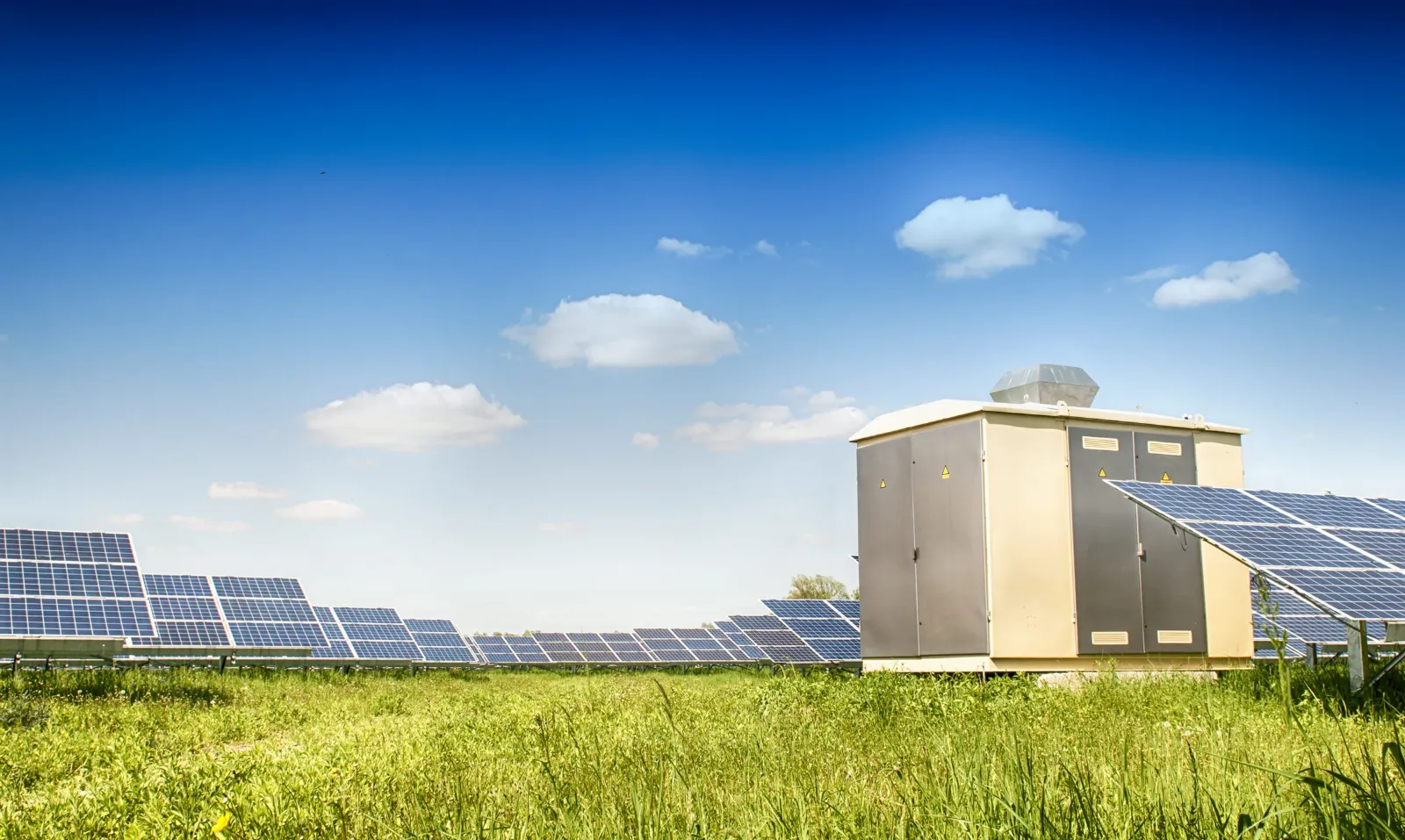
The government refused permission for the Botley West solar farm in Oxfordshire on Tuesday 10 November 2026. At 840 megawatts (MW) it would have been the largest solar farm in the UK. Solar Power Portal reports it is the first time a solar project of national significance has been turned down. The decision came two weeks after the government approved the 800 MW Great North Road solar park. It doesn’t change your business electricity bill. What you pay is set by your contract, and that’s where we come in: we’ll show you what’s on offer for your business well before you have to decide.
The facts
- Who: Photovolt Development Partners (PVDP), applying on behalf of SolarFive Ltd.
- Who decided: Baroness Curran, a minister at the Department for Energy Security and Net Zero, on behalf of the Energy Secretary.
- Where: land near Botley, Woodstock and Kidlington, across the West Oxfordshire, Cherwell and Vale of White Horse districts. Much of it belongs to the Blenheim Estate.
- Size: a maximum of 840 MW, on about 1,400 hectares. That is more than 2,000 acres.
- Cost: an estimated £800 million. On our own maths, that is about £950,000 for each megawatt.
- Output: the developer had said it could power the equivalent of 330,000 homes.
- Share of the target: Farmers Weekly reports it would have delivered about 1.5% of the government’s target of 54 to 57 gigawatts of solar by 2030.
- Timeline: the decision was postponed twice before it was made. The developer has six weeks to challenge it, Solar Power Portal reports.
The refusal follows the recommendation of the Examining Authority, the planning inspectors who examined the application.
Why was it refused?
The decision notice says the “adverse impact of the proposed development would outweigh its benefits”. The reports of the decision letter give these reasons:
- Green Belt and heritage. The letter found “substantial harm to the Green Belt and harm to a number of designated heritage assets”, including the Blenheim Palace World Heritage Site.
- Landscape. It found “significant adverse effects in relation to landscape and visual amenity”.
- Aviation safety. The site is close to London Oxford Airport. Farmers Weekly reports that ministers concluded the unresolved concerns posed a “real, credible and significant risk to public safety”.
- Farmland. Farmers Weekly reports that 314 hectares of the site was “best and most versatile” agricultural land, the higher grades of farmland. That is 42% of the area that would have held panels, and it would have been out of arable food production for more than 40 years. The government concluded the developer had “failed to seek to minimise the impacts” on that land.
- How the application was made. Solar Power Portal reports that the inspectors found the developer had treated the scheme’s impacts as “inevitable and acceptable” because solar is a national priority, and so hadn’t done enough to reduce them.
Is this a change of direction on solar?
That is the question, and the reports don’t agree.
Solar Power Portal describes the application as weaker than others, and notes that the 800 MW Great North Road project was approved a fortnight earlier. We covered that decision in our story on the Great North Road and Frodsham solar farms. It also calls the refusal “a bad sign for the industry”.
Chris Hewett, chief executive of the trade body Solar Energy UK, called it “a regrettable decision”. He said: “We all know the desperate need for cheaper power and to push expensive gas off the grid”. He also said there are “multiple gigawatts of consented capacity waiting in the wings” and that next year “will no doubt see more solar farms constructed than ever before”.
Roger Mortlock, chief executive of the Campaign to Protect Rural England, called the decision “hopeful news for the countryside in Oxfordshire and beyond”.
Charlie Maynard, the Liberal Democrat MP for Witney, said he was “delighted”, and called it “a win for everyone who wants renewable energy and wants it to reflect the wishes of local residents”.
PVDP said it was “extremely disappointed” and would consider its next steps.
The questions worth asking
We welcome new generation, because more homegrown power keeps prices lower over the long term. This decision leaves questions for anyone who buys electricity:
- Does one refusal slow the rest? Two 800 MW solar farms have been approved. This is the first refusal. One decision isn’t a pattern.
- Where does the target stand? On our own maths, 840 MW is between 1.5% and 1.6% of a 54 to 57 gigawatt target. It has to come from somewhere else now.
- Will developers pick different sites? The reasons given here are about this site and this application: Green Belt, a World Heritage Site, an airport and good farmland.
- Will the developer challenge it? It has six weeks.
What does this mean for your business?
- Nothing changes on your bill or your contract. Botley West wasn’t built, and no price you’re offered today depended on it.
- Don’t plan around any single project. Approved or refused, a planning decision isn’t a working solar farm. Price your next contract on what suitable suppliers are offering now, and tell us your end date as early as you can so there’s time to choose when to fix.
- Your own roof is in your hands. Panels on your own building cut what you buy from the grid. We set out the case in our piece on rooftop solar in the UK, and our team can help with solar power for your business.
- Gas still matters to your electricity price. The solar industry’s argument for projects like this is that they push gas off the grid. Until more of them are built, the price of gas keeps feeding into the price of power, which we saw again in today’s story on the January price cap forecast.
Talk to our energy experts
Want to know what solar on your own premises could save, or what fixing would cost today? Book an appointment with our Energy Team, get a quote, or call us on 01273 914000.