
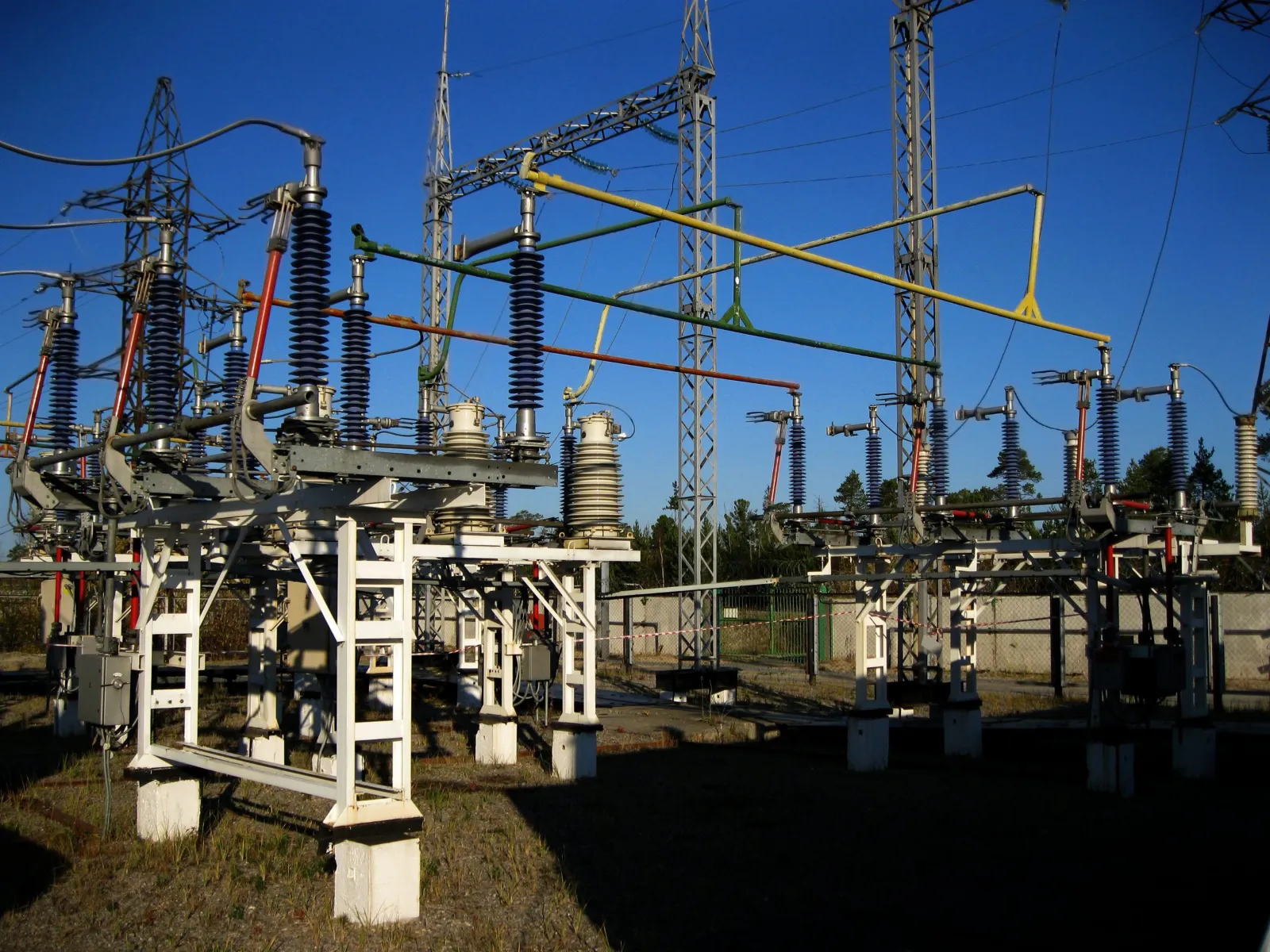
Main construction began on Friday 6 November 2026 on the Lewis Hub, near Stornoway. It’s one end of the first direct electricity link between the Western Isles and the Scottish mainland. SSEN Transmission, which owns the high-voltage network in the north of Scotland, says the link will be able to carry up to 1.8 gigawatts (GW) of renewable electricity to the rest of Britain. It doesn’t change your business electricity bill today. It’s one of the grid projects that decides whether Scottish wind power can reach the places that use it.
The facts
- What: a converter station and substation at Arnish Moor, near Stornoway on the Isle of Lewis. A converter station changes electricity between the alternating current (AC) used on the grid and the direct current (DC) used to send power efficiently down a long cable.
- The link: high voltage direct current (HVDC) cable from Lewis to a second converter station at Fanellan, near Beauly, west of Inverness.
- Length: around 4 km of underground cable on Lewis, 81 km of subsea cable from Arnish Point to Dundonnell on the mainland, and around 80 km of underground cable from there to Beauly. On our own maths, that’s about 165 km.
- Capacity: up to 1.8 GW.
- Who: SSEN Transmission. Highland contractor RJ McLeod leads the first phase of construction, the BBC reports.
- Contracts so far: in January, STV reported a contract worth nearly £143 million to Linxon UK for design and equipment for the substation.
- Local spending: Enerdata reports SSEN is targeting £125 million of spending with local businesses over the life of the project.
- Community fund: £1.06 million over five years, with the first £212,000 open now. SSEN is also paying for £3.4 million of improvements to the Arnish Road.
- Total cost: SSEN hasn’t given one on the pages we read, so we can’t work out a cost per kilometre.
Sandy Mactaggart, SSEN Transmission’s director of offshore delivery, told the BBC the project was about “unlocking the islands’ vast renewable energy potential”.
The mainland end is still in dispute
A cable needs two ends. SSEN’s project page records that in February 2026 Highland Council’s planning committee refused the Fanellan converter station, against the recommendation of the council’s own planning officers. SSEN said it would appeal to the Scottish Government, and that it was “confident that the Fanellan hub will secure consent following appeal”.
The page doesn’t record an outcome. SSEN said that if the appeal failed, “we will carefully consider our next steps”. Until that’s settled, the timetable for the whole link depends on it.
A second link moves forward: Eastern Green Link 3
On 11 November, SSEN announced that the marine licence had been granted for the Scottish section of Eastern Green Link 3 (EGL3). It’s a planned high-voltage subsea cable between Scotland and England, built jointly with National Grid Electricity Transmission. The licence covers laying and running the cable in Scottish waters, including where it comes ashore near Peterhead in Aberdeenshire.
SSEN says EGL3 will “help alleviate network constraints”. It’s a licence, not a start date: the announcement gives no construction timetable or cost.
Why does a cable in the Hebrides matter to a business in England?
Because of constraints. A constraint is when the network can’t carry all the power being generated in one place to the people who want it somewhere else. When that happens, wind farms can be paid to switch off while gas power stations elsewhere are paid to switch on.
Those costs are shared across everyone’s bills, including business bills. They’re part of the non-commodity costs, the charges on your bill that aren’t for the energy itself. The cost of building the network is on your bill too, and our guide to transmission network charges explains that part.
So there are two sides to the sum. New links cost money, which is recovered through network charges. They also cut the waste of paying for power that can’t be delivered. Our view is that grid investment keeps prices lower over the long term, and we welcome it. We made the same case when the Sea Link undersea cable between Suffolk and Kent was approved, and the debate over zonal pricing was about the same problem: plenty of wind in Scotland, and not enough cable to move it south.
The questions that remain:
- When will it be finished? SSEN hasn’t given a date in the announcements we read.
- What will it cost? One contract of £143 million is known. The total isn’t.
- Will Fanellan get consent? Without it, the cable has nowhere to land.
What does this mean for your business?
- Nothing changes on today’s contracts.
- Network charges are the part of your bill to watch. The cost of rebuilding the grid is recovered through them. If you’re comparing quotes, check whether those charges are fixed in your price or passed through at cost, because that decides who carries the risk if they go up.
- Longer contracts need this conversation. If your next contract runs into the years when these links are being built and paid for, talk to one of our energy experts about how suppliers are pricing network costs. The earlier you arrange it, the more time there is to compare how suitable suppliers treat them.
Talk to our energy experts
Want to see how much of your electricity bill is network charges, and whether they’re fixed? Book an appointment with our Energy Team, get a quote, or call us on 01273 914000.