
The government approved Sea Link, a new undersea power cable between Suffolk and Kent, on Friday 30 October 2026. National Grid has asked for £3.2 billion to build it, and Ofgem, the energy regulator, has proposed allowing £2.9 billion. Construction is expected to start in early 2027, and the target is to have it working by the end of 2031, possibly a year earlier. It’s one of the biggest grid projects in the country, and it’s aimed squarely at a cost every electricity bill payer shares.
What has been approved?
Sea Link is a 2 GW electricity connection between Suffolk and Kent, running mainly under the sea. A gigawatt (GW) measures how much power a connection can carry at once. The government says 2 GW is enough to power the equivalent of 2 million homes.
The approval is a Development Consent Order, the planning permission a national project of this size needs. Baroness Curran made the decision on behalf of the Energy Secretary, and it lets National Grid Electricity Transmission (NGET) move on to building it.
What will actually be built?
Ofgem’s assessment sets out the full list. Think of it as two big plugs, one at each end, joined by a very long extension lead:
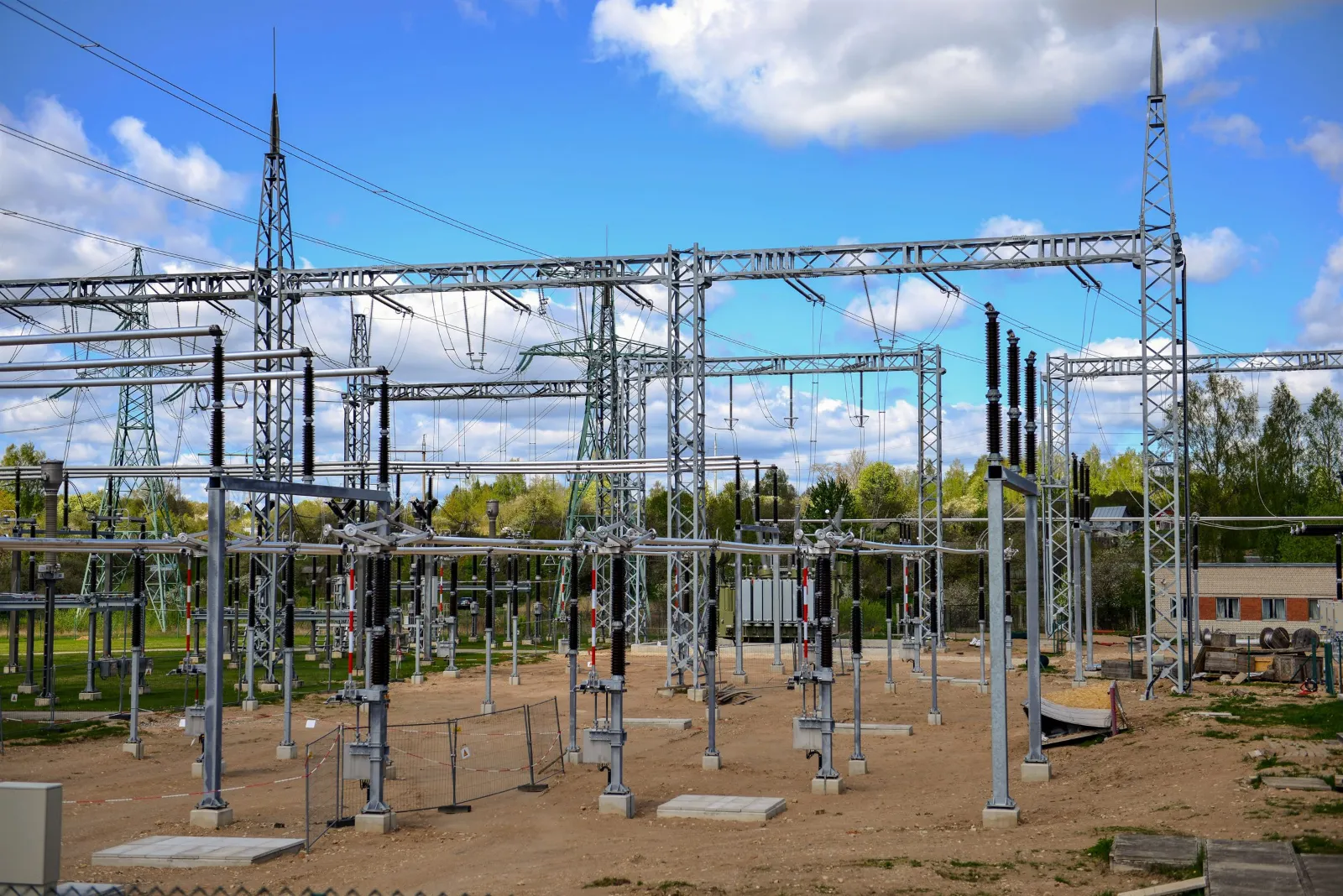
- Two converter stations: one near Saxmundham in Suffolk and one near Minster in Kent. At each one, power switches between alternating current (what the onshore grid uses) and direct current (what the long cable carries).
- 136 km of high voltage cable pair: 12 km underground in Suffolk, 122 km under the southern North Sea from the Aldeburgh and Thorpeness coast to Pegwell Bay, and 2 km underground in Kent.
- Joining points on land: where the sea cable meets the land cable, about 800 metres inland at each end.
- New substation equipment: three new bays at the new Kiln Lane substation in Suffolk, linked by 2 km of cables, and a new 400 kV substation at Minster in Kent.
- Overhead line work in Kent: new wires on about 21 km of existing line between the Richborough and Canterbury substations, and a 2 km section replaced with a new 3.5 km stretch on nine new towers to link into Minster. These works sit outside the cost figures below.
Siemens Energy is building both converter stations, supported by its control centre in Manchester, which has had more than £5 million of investment. Sumitomo Electric is making and laying the cable from its new £350 million factory at the Port of Nigg in Scotland. None of the documents we’ve read give a figure for the number of jobs the project will create.
How much will it cost?
National Grid asked Ofgem for £3.197 billion to build Sea Link. Ofgem has proposed allowing £2.89 billion, about £306 million less. Both figures are in 2023/24 prices, which means they’re shown in what money was worth in that year. Ofgem isn’t questioning the main contracts, which it says were competitively tendered. The cut is mostly money National Grid wanted up front for risks that may never happen. If they do, it can come back for the money later.
The two biggest pieces are:
- The converter stations (Siemens): £1.37 billion.
- The cable (Sumitomo): £849.9 million, covering making and laying the sea cable and the cable work on land.
So what does a metre of Sea Link cost? On our own maths, the cable package works out at about £6.2 million per kilometre, or roughly £6,250 per metre of route. Spread the whole £2.9 billion over the 136 km and it’s about £21,000 per metre. Bear in mind each metre of route is a pair of cables, and many of the contracts have built-in price adjustments linked to commodity prices and labour costs, so the final bill can move.
Ofgem has also flagged an unsolved technical problem. Studies found Sea Link may not meet the rules on “harmonics”, electrical distortion that can affect the grid, when running flat out. More filters or work elsewhere on the network may be needed, and that cost isn’t settled yet. Ofgem says running Sea Link below 2 GW to get round it won’t count as delivering the project.
How did it get here?
- 27 March 2025: National Grid applied to the Planning Inspectorate.
- 23 April 2025: The application was accepted for examination, with local communities, councils and other interested parties able to have their say.
- 30 July 2026: The examiners sent their recommendations to the government.
- 1 September 2026: Ofgem published its proposed cost allowance for consultation.
- 30 October 2026: The government gave planning approval.
- Early 2027: Construction expected to start.
- December 2031: Ofgem’s target date for the link to be working. National Grid says it’s working towards a year earlier.
Why does the grid need it?
Think of the grid as a motorway network. When the wind blows hard, there’s often more power in some areas than the roads out can carry. When that happens, generators are paid to switch off, and other power stations, usually gas, are paid to switch on nearer to where the power is needed. The government says Sea Link will ease pressure on the grid and reduce the need for those payments.
Those payments add up. The Ferret’s investigation estimated the UK had spent over £1.3 billion turning wind farms off in 2025 by December, mostly in Scotland. Researchers it spoke to put balancing costs, which include those payments, at around £50 a year on the typical annual electricity bill.
That’s why speed matters. Ofgem points to NESO modelling that suggests bringing Sea Link forward to 2030 would deliver £1.1 billion to £1.4 billion of benefits to consumers. Ofgem is now looking at how it could fund extra work to get it done sooner.
What else was in the announcement?
- Community funds: National Grid will deliver the government’s community benefits scheme, with more than £1 million each for community funds in Suffolk and Kent.
- Two big solar farms: Great North Road Solar and Biodiversity Park near Newark (800 MW) and Frodsham Solar in Cheshire, which pairs solar panels with battery storage.
- Your own grid connection: The government is bringing forward reforms to let developers and businesses build their own grid connections where appropriate, to cut delays and costs.
- Great British Grid: A new publicly owned body within Great British Energy to bring public and private money together to speed up network upgrades.
What does this mean for your business?
Sea Link won’t carry any power before 2030 at the earliest, so there’s nothing to change on your bill yet. But in the long run, it’s exactly the kind of project that helps keep electricity prices lower for everyone.
Our view is simple. A grid that can move power to where it’s needed is a cheaper grid to run. Every time power can’t get through, we all pay twice: once to switch off the cheap generation, and again to switch on something more expensive elsewhere. Those costs land on business and household bills alike, and they’re growing. Areas where the network moves power efficiently are best placed to benefit. So businesses and households should welcome grid improvements like Sea Link. Without them, it costs us all more in the long run.
Yes, £2.9 billion is a lot of money. But NESO’s own modelling says just getting it built a year sooner is worth more than a billion pounds to consumers. Doing nothing isn’t free.
In the meantime, the part you control is your contract. We always advise arranging your next contract as early as possible, normally 12 months before your renewal date, so you can take advantage of forward pricing rather than the short-notice prices on offer when a renewal is left to the last month or two. We compare prices from suitable suppliers and present the options that best suit your business.
Talk to our energy experts
Want to know how network and balancing costs show up on your bill, or when to start on your next renewal? Book an appointment with our Energy Team, get a quote, or call us on 01273 914000. No pressure, just straightforward advice from energy experts who are outstanding in their field.