
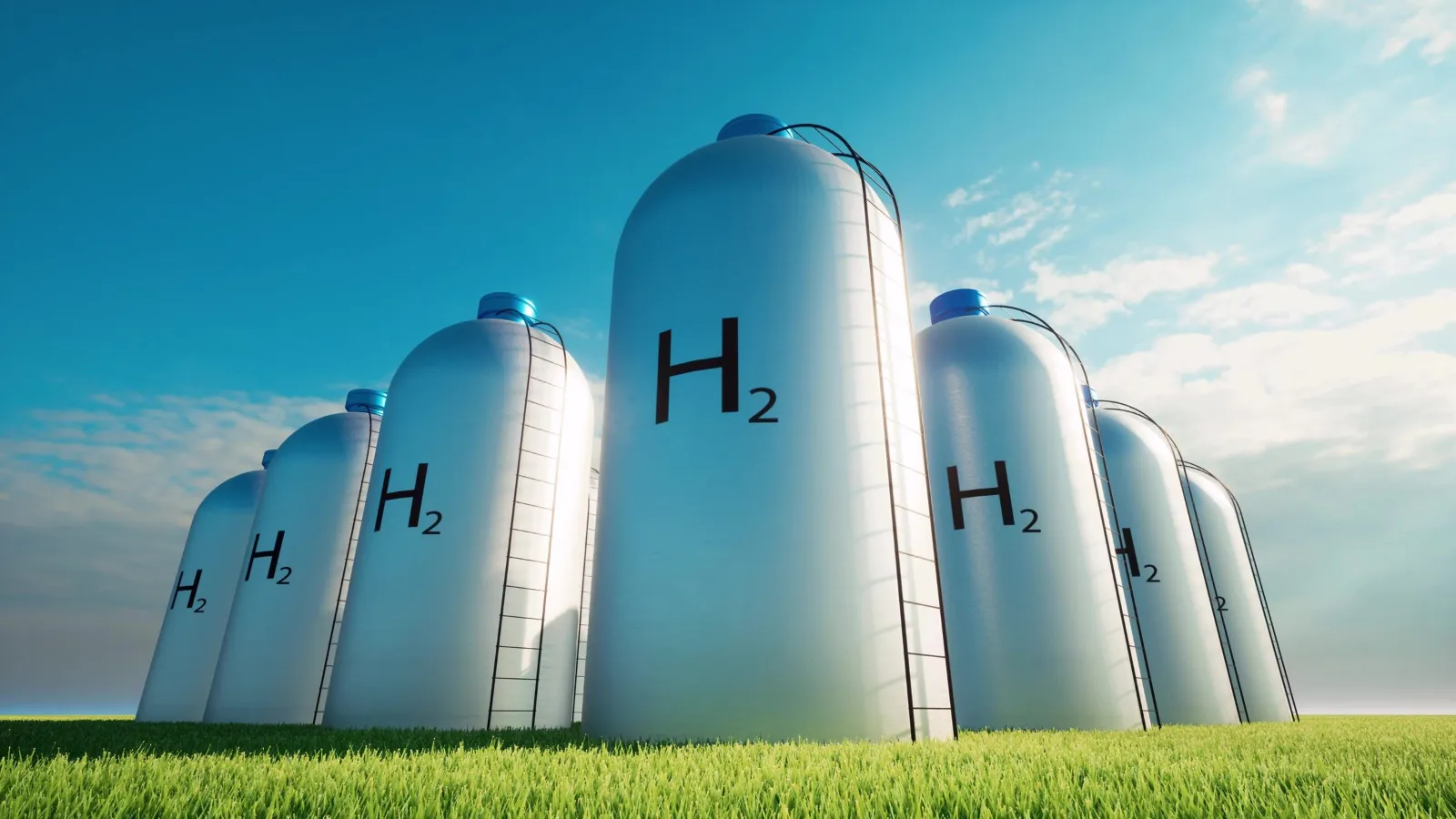
A plant that will make hydrogen from water and renewable electricity has been approved beside the former Chapelcross nuclear power station near Annan in southern Scotland. South of Scotland Enterprise announced that Green Cat Hydrogen’s planning application for its Creca Hydrogen Facility “has been approved”, and the BBC reported it on Tuesday 24 November 2026. Planning approval is one step. The developer is also waiting on the UK Government’s hydrogen funding round, and nothing here changes the gas or electricity your business buys now.
The facts
- Who: Green Cat Hydrogen, a developer set up in 2022. Its chief executive is Gavin Catto.
- Where: the Energy Transition Zone beside Chapelcross, near the village of Creca in Dumfries and Galloway.
- What it will make: “over 4,000 tonnes of green hydrogen per year”. On our own maths that is about 11 tonnes a day.
- How: by electrolysis, “powered by locally generated renewable electricity”.
- Who will use it: “local industries”. At the planning stage the company named food and drink, manufacturing and the public sector.
- Carbon saving claimed: up to 26,000 tonnes of CO₂ a year. On our own maths that is 6.5 tonnes of CO₂ for every tonne of hydrogen.
- Jobs: around 50 high-skilled jobs once it is running, plus 150 during construction.
- Timeline: public consultation from 1 April 2025, then a planning application, now approval. When the application went in, the plant was “expected to enter commercial operation in 2028”.
- Cost: none of the sources we read gives one.
- Who approved it: the announcement doesn’t name the body. The earlier announcements said the application would go to Dumfries and Galloway Council.
What green hydrogen is
Green hydrogen starts as water. Electricity splits the water into hydrogen and oxygen. If that electricity comes from renewable sources, the hydrogen is called green. The BBC’s summary is that the hydrogen “can then be used as a fuel where the main byproduct of burning it is water”.
Mr Catto’s case for it, made when the project was first shown to the public, is that it is “especially well-placed to solve the decarbonisation challenge faced in hard-to-electrify sectors”. In other words it is aimed at the jobs that are difficult to run on electricity directly.
Why put it next to a nuclear site
Chapelcross is a former nuclear power station that is being decommissioned by Nuclear Restoration Services, part of the Nuclear Decommissioning Authority. The site covers more than 210 hectares.
In August 2024 the partners behind it published a masterplan to turn it into a “Green Energy Hub”, with hydrogen production and storage, advanced manufacturing, and energy and enterprise campuses. The Authority pointed to “the site’s range of existing utilities and grid infrastructure” and said it was releasing 60 hectares of land for the first phase, “the equivalent of 84 adult football pitches”.
Public money sits behind it: up to £15.3 million from the Borderlands Inclusive Growth Deal, made up of £7.5 million from the Scottish Government and £7.8 million from the UK Government, which “could help to finance the access and utility improvements”.
The hydrogen plant is on the Energy Transition Zone next door. South of Scotland Enterprise says the zone is meant to kick-start the main site. Martin Valenti, its director of investment and sustainable enterprise, said the region’s ambitions “will be anchored by Green Cat Hydrogen’s now approved plans”.
It isn’t the only plan there. The BBC reports that separate proposals for a £16.5 billion data centre at Chapelcross “have generated a record number of representations” to the council.
The part that touches electricity bills
One line in the announcement links this to a cost every electricity customer pays. The plant could act “as a demand response facility, helping to reduce electricity curtailment in the South of Scotland”.
Here is the link. When there is more wind power than the grid can carry, wind farms are switched off, and bill payers pick up the cost. A plant that can soak up spare power and turn it into something useful reduces that waste. The BBC makes the same point, that hydrogen can serve “as a means of storing energy generated by renewables”.
We looked at another answer to the same problem on 24 November 2026 in Drone fits sensors to live power line in UK first.
What still has to happen
- The funding round. The Creca plant is shortlisted in HAR2, along with two other Green Cat Hydrogen projects, Binn Ecopark and Strathallan. The partners “expect the next round of the HAR2 process to proceed before the end of the year, with further development stages throughout 2027”.
- The developer’s own words. Mr Catto called approval “a major milestone” and added: “we look forward to the UK government’s determination on HAR2-shortlisted projects, which will provide welcome stability and confidence for developers like us.”
The questions worth asking
- Is 2028 still the opening date? That date was given when the application was submitted. The approval announcement doesn’t repeat it.
- What will the hydrogen cost? No price is given anywhere, so there is nothing to compare with gas.
- Who has signed up to buy it? “Local industries” are not named.
- How does it reach the customer? The plans include “storage and associated logistics”. The sources don’t say whether that means pipes or lorries.
- What happens if the funding round says no? Not addressed.
What does this mean for your business?
- This is a plant for the late 2020s, and your contracts won’t wait for it. Our take: the gas and electricity you use between now and then will be bought on the prices on offer when you sign. Arrange each contract as far ahead as you can. We’ll put business gas prices and business electricity prices from suitable suppliers in front of you.
- Use a lot of gas for heat or process? Hydrogen is being aimed at that kind of use, and this plant is meant for local industry. Know your own numbers first. Send us your bills and we’ll go through with you how much gas you use, when you use it and what you pay for it.
- Curtailment is a cost you already carry. Our take: we welcome projects that use spare wind power, because less waste on the grid means less cost to share out.
- Ask what’s fixed. If you want to know which system costs are fixed in your electricity price and which can change, send us your contract or latest quote and we’ll go through it with you.
Talk to our energy experts
Want your gas and electricity sorted well ahead while the new technology is still being built? Book an appointment with our Energy Team, get a quote, or call us on 01273 914000.