
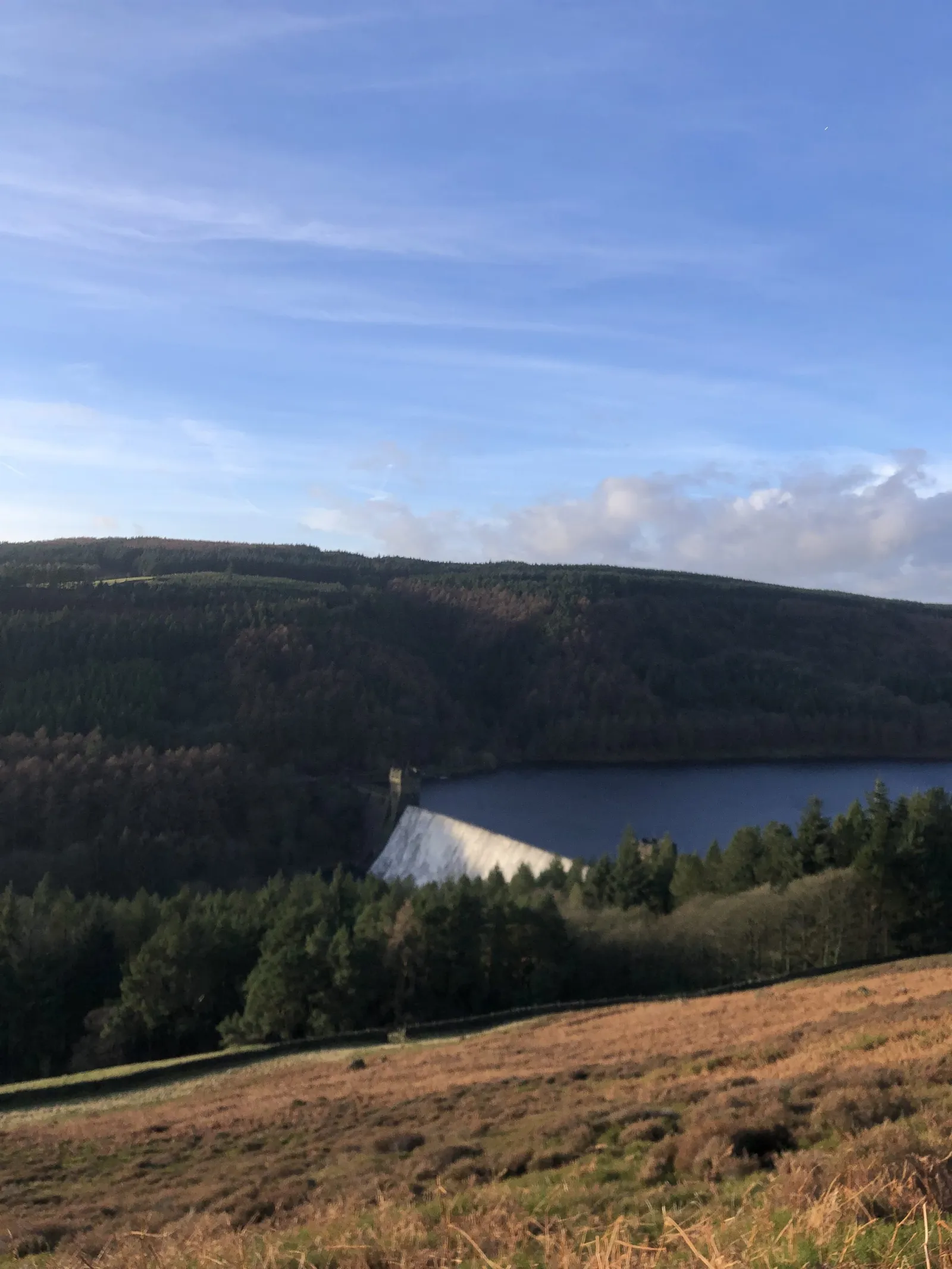
Thames Water has asked the government for permission to build a 150 billion litre reservoir near Abingdon in Oxfordshire. The Planning Inspectorate says it “received the application on Thursday 19 November 2026” and will decide by 17 December 2026 whether to accept it for examination. The BBC reports that the White Horse Reservoir “could cost £7.5bn to construct” and that customers of Thames Water, Affinity Water and Southern Water will pay for it through their bills. The reports don’t say when charges for it would start to appear on bills, and nobody can comment on the application formally yet.
The facts
- Who: Thames Water Utilities Limited is the applicant. The reservoir would also supply customers of Affinity Water and Southern Water.
- What: the White Horse Reservoir, known until January 2026 as the South East Strategic Reservoir Option, or SESRO.
- Where: south west of Abingdon. The Planning Inspectorate describes the site as bounded by the A34 to the east, the Great Western Main Line railway to the south, the A338 to the west and the River Ock to the north.
- Size: 150 billion litres. The BBC says it would be the second largest reservoir in England and “about the size of Gibraltar”.
- Who it would serve: 15 million people across the south east, Thames Water says. Its January announcement said it “would supply water locally in Oxfordshire and Wiltshire, through to Hampshire and London”.
- Output in a drought: up to 271 megalitres a day, which Thames Water puts at “around 3 million baths”.
- Cost to build: see the next section, because four different figures have been reported.
- Cost to run: £1.9 billion over its first 65 years, the BBC reported on 19 September 2025.
- Jobs: around 1,800 during construction, Thames Water says.
- Timeline: applied 19 November 2026. Decision on acceptance by 17 December 2026. Examination expected to begin in spring 2027 if it is accepted. Main build hoped to start in 2032. Water available from 2040. Fully finished by 2043.
- Who decides: the Oxford Mail reports that the Secretary of State for Environment, Food and Rural Affairs will make the decision.
What it will cost, and why the number keeps moving
The reports we read give four figures for the build cost.
- £2.2 billion: the earlier estimate.
- £5.5 billion to £7.5 billion: the range Thames Water published in August 2025. The BBC reported that the company put the rise down to changes to the design, “rapid inflation” and a rise in contracting costs.
- £5.7 billion: the value of the tender notice Thames Water launched on 22 January 2026 for a main contractor to “design, build, test and commission the reservoir”.
- £6.6 billion: the figure the BBC used on 15 September 2026.
On our own maths, the top figure of £7.5 billion is 3.4 times the first estimate. Spread across the 15 million people the reservoir is meant to serve, it comes to £500 each. That is our sum, not a bill forecast.
The only bill figure in the reports is from August 2025. Nevil Muncaster, Thames Water’s strategic water resources director, told the BBC that “about £5 a month would be added to bills by 2040”. He added: “There’s a lot of things that can change that.” The reports don’t say whether that figure covers business customers, or how the cost would be shared between the three companies.
The BBC reported in August 2025 that the report carrying the updated cost would be reviewed by RAPID, a joint body of three regulators.
How the reservoir would work
The reservoir would be held in by embankments and filled from the River Thames in winter, when Thames Water says there is “plenty available”. Leonie Dubois, delivery director at Thames Water, told the BBC the embankments would be “gradual”, with grass and vegetation on them. The BBC reported that water “would also be released from the reservoir back into the river for re-abstraction downstream when river levels drop, or demand for water increases”.
She said: “It’s absolutely essential that we have a place to store water during the wetter months, and then we can put it back into the river during the long dry summers that we are experiencing.”
The application covers far more than a lake. The Planning Inspectorate lists a “water transfer tunnel/pipelines”, “water inlet and outlet structures”, pumping stations, “watercourse diversions”, new access roads, “temporary railways sidings for material handling”, and “leisure and recreation and education facilities”. Thames Water’s plans include a visitor centre and café, sailing and paddleboarding on two smaller recreational lakes, and angling piers.
Southern Water’s part is a separate pipeline. Ben Ring, its major projects director, said that with the Thames to Southern Transfer the reservoir “would supply our customers with up to 120 million litres of water a day during a drought”, so the same amount can be left in the Test and the Itchen, Hampshire’s chalk stream rivers.
Why now
The BBC reported that the application “comes as 80% of the UK remains in drought after its hottest summer on record”. We covered Thames Water’s own position on 16 November 2026 in Thames Water drought hits 100 days: hosepipe ban stays.
Thames Water describes the project as “one of nine new reservoirs” planned across the UK. We wrote about another new reservoir on 17 November 2026 in Havant Thicket reservoir: £26.84m pipeline deal.
Business groups want it built faster. On 15 September 2026 a group including the Thames Valley Chamber of Commerce wrote to the prime minister asking for the reservoir to be made a critical national priority. “The case for action has never been stronger,” the letter said.
Who is against it, and why
- The local council. Bethia Thomas, leader of Vale of White Horse District Council, said: “It is no secret that we have deep concerns for the reservoir and the impact it would have on our district.” She listed “the size of the proposed scheme, its environmental impact and significant (growing) financial and carbon costs, as well as the potential for increased flood risk in local watercourses”.
- The countryside charity CPRE Oxfordshire. Its director, Marcus Gilleard, said: “Following this summer’s extended drought, we recognise the need to secure reliable water supplies for the south east. But water security must not come at the expense of our countryside.”
- The Group Against Reservoir Development. Its chairman, Derek Stork, told the BBC in September that fixing leaks should be “the first priority”.
- The local MP. Olly Glover, the Liberal Democrat MP for Didcot and Wantage, said in September 2025 that people “just don’t have faith that that money is going to be well spent, because there’s already so many water leaks and so much sewage dumping”.
Thames Water’s answer on public opinion is a survey. It says almost nine in ten people surveyed across the region backed the reservoir. The campaign group’s chairman suggested Thames Water had surveyed a selected sample, and the group has started its own petition.
What happens next
A Development Consent Order is the route for a Nationally Significant Infrastructure Project. The Planning Inspectorate sets out the stages.
- Acceptance. The Inspectorate has 28 days to check the application. Its decision is due by 17 December 2026. The application documents are published only if it is accepted.
- Pre-examination. This “usually takes about 3 months”. Anyone who wants a say has to register at this stage, and the registration window must be at least 30 days.
- Examination. Inspectors ask questions and may hold hearings. This “takes up to 6 months”.
- Recommendation. The inspectors report to the minister within 3 months.
- Decision. The minister has 3 months to decide.
- Challenge. Any challenge in the High Court “must happen within 6 weeks”.
On our own maths, those stages add up to about 15 months after acceptance, before any court challenge.
The questions worth asking
- What will businesses pay? The reports say customers will pay through their bills. None gives a figure for business customers.
- Which build cost is right? £5.7 billion, £6.6 billion and “could cost £7.5bn” have all been reported this year.
- What happens to bills before 2040? The £5 a month figure is for 2040. The reports don’t say when charges for the reservoir would start.
- What covers the gap? Water is not due until 2040. The reports don’t set out how supply is secured in dry summers before then.
- Will it be accepted? That answer is due by 17 December 2026.
What does this mean for your business?
- In the Thames Water, Affinity Water or Southern Water area? This project would be paid for through bills in your area. Our take: a scheme of this size is a reason to know exactly what you pay for water now and how the charges on your bill are made up. Send us a recent bill and we’ll go through it with you.
- Dry summers are the reason it is being built. Thames Water’s own director talks of “the long dry summers that we are experiencing”, and the water is not due until 2040. If your business can’t run without water, work out how much you use, where you use it and what you would do under restrictions. Tell us your usage and we’ll go through your options for business water with you.
- Use less, pay for less. If your water is metered, a leak or a wasteful process costs you on every bill. Our take: with supply tight in the south east, checking your usage is worth doing whatever happens to this application.
- Sort the contract early. In England a retailer bills your business for water. Get your water arrangements in place as far ahead as you can, so you’re choosing with time on your side.
- Want a say on the reservoir itself? You can’t comment yet. If the application is accepted, the Planning Inspectorate will open registration for anyone who wants to take part.
Talk to our water experts
Want someone to go through your water bill and your usage with you while this reservoir works its way through planning? Book an appointment with our team, get a quote, or call us on 01273 914000.