
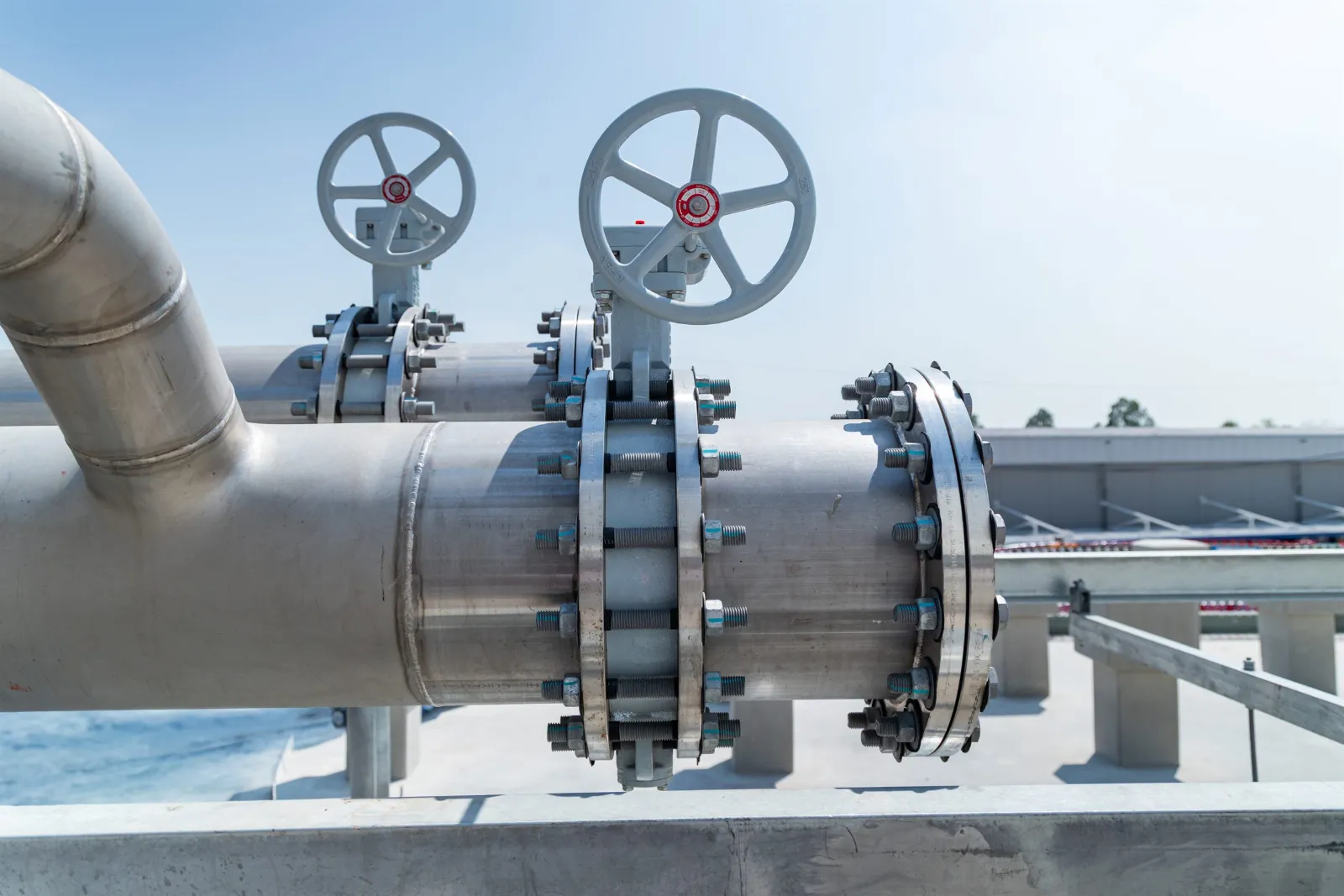
Portsmouth Water has appointed the contractor Clancy to build a pumping station and an 8.5 km pipeline for Havant Thicket Reservoir in Hampshire, under a contract worth £26.84 million. Construction Enquirer reported the award on 22 October 2026. Work starts in December and is due to finish in early 2030. Nothing changes on your business water bill or your supply today.
The facts
- Who: Portsmouth Water is the client. Clancy is the contractor.
- What: a new pumping station at Farlington Water Treatment Works, and a pipeline of about 8.5 km carrying treated water from the works to Portsmouth Water’s storage reservoirs. Clancy names Nelson Service Reservoir as one of them.
- Capacity: up to 32.4 million litres of water a day. Construction Enquirer puts that at enough to fill 400,000 bathtubs.
- Cost: £26.84 million for the pumping station and the pipeline together.
- Cost per metre: on our own maths, £26.84 million over 8,500 metres is about £3,160 a metre. That figure includes the pumping station, because the reports don’t split the two.
- Timeline: work starts in December 2026. Completion is scheduled for early 2030, a little over three years later.
- Route: Smart Water Magazine reports that the pipeline mostly crosses farmland. Clancy says it will drill underneath transport routes instead of digging across them.
- Jobs: Clancy says the work will be done by teams it employs directly and by local specialist firms. It gives no number.
Clancy describes Havant Thicket as the first new reservoir in the UK in more than 30 years, and says the project got planning permission in 2021. Smart Water Magazine reports that earlier contracts for the main reservoir and for a pipeline from Bedhampton Springs have already been awarded to other contractors.
What is the pipeline for?
Bob Taylor, chief executive of Portsmouth Water, said: “Ultimately, this work is about delivering the core purpose of Havant Thicket Reservoir: helping to protect the River Test and River Itchen, two incredibly precious chalk streams here in Hampshire.”
A reservoir only helps if its water can reach the network. This contract builds that link: the pumping station pushes treated water out of Farlington, and the pipeline carries it to the reservoirs that feed customers.
Matt Cannon, chief executive of Clancy, said the water sector “faces growing pressure from our changing climate and rising demand”.
Who is paying?
Smart Water Magazine reports that the upfront money for the reservoir comes from the infrastructure investor Ancala and a group of banks, and that Southern Water’s customers will repay it through their bills. None of the reports we read says how much that adds to a bill, or when.
The contractor’s announcement also says this work is separate from the proposed Hampshire Water Transfer and Water Recycling Project, which is a different scheme.
Will there be disruption?
Mr Taylor said: “We’ve worked hard to design the route in a way that keeps disruption to a minimum, but we know there will inevitably be some impact.” He said Portsmouth Water will hold meetings and drop-in sessions for people along the route.
The questions worth asking
We welcome new water infrastructure. More storage, and the pipes to move it, make supply more secure in dry years. These are the questions the reports leave open:
- What does it add to bills in Hampshire? No figure has been published in what we read.
- Does early 2030 hold? It’s a start in December 2026 and more than three years of work.
- What happens in dry years before then? The pipeline doesn’t carry water until it’s finished. We reported in our drought update for businesses that the government said on 20 October that Southern Water’s application for a ban on non-essential water use was with the Environment Secretary.
- How much less water will be taken from the Test and the Itchen? The reports name the aim but don’t give a volume.
What does this mean for your business?
- Your bill doesn’t change because of this contract today. No report gives an amount or a date for any change.
- You can’t change who runs the pipes, but you can change who bills you. Your wholesaler, the regional water company, is set by where your premises are. Your retailer, the company that sends the bill, is your choice in England. Our business water page explains how the two fit together.
- Know what you use before a dry summer. If your business depends on water, find out your daily use and whether any of it would count as non-essential under a ban. Send us a recent bill and we’ll check what you’re paying.
- Sort your water contract before it ends. If you’ve never chosen a retailer, or your contract is close to its end date, tell us the date and we’ll compare suitable retailers for you and handle the switch. Your supply doesn’t stop.
We covered how drought warnings reach businesses in our story on water warnings and hosepipe bans.
Talk to our water experts
Want your business water bills checked, or your retailer compared? Book an appointment with our team, get a quote, or call us on 01273 914000.