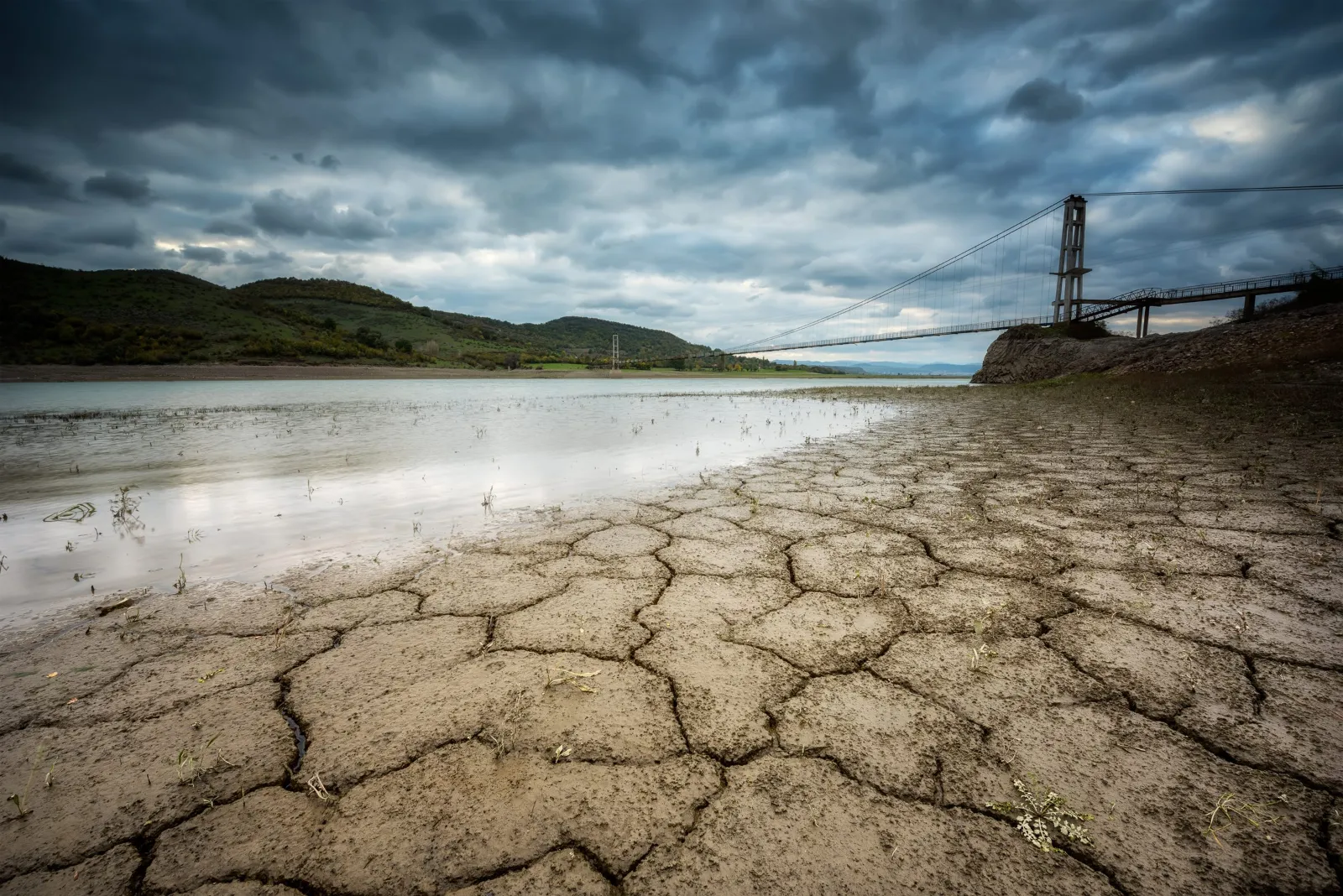
London and the Thames Valley passed 100 days of drought in early November 2026, and Thames Water says months of sustained rain are still needed to rebuild supplies. The Environment Agency declared drought in the region on 29 July 2026. The Temporary Use Ban, often called a hosepipe ban, stays in place for all Thames Water customers, and the company says restrictions will only lift “when substantial rainfall replenishes supplies and conditions allow”. If your business is in the Thames Water area, the ban is still in place this winter.
How bad is it?
Thames Water has published the latest figures for its region:
- Rainfall from March to September: between 1 March and 30 September 2026, the region had just 34% of the rain recorded in the same period of 2024.
- Rainfall since August: from 1 August to 31 October 2026, it had 80.8% of its long-term average, compared with 156.8% in the same period of 2024, a year without drought.
- Reservoirs: on 3 November, total London reservoir storage was 56% and Farmoor Reservoir was at 76%. In mid-October they stood at 54% and 68%.
- Groundwater: levels of the water held underground are below normal to exceptionally low across London, and between normal and exceptionally low across the Thames Valley and Home Counties.
So the reservoirs are slowly recovering, but the ground is still dry. Julie Morton, head of water resources at Thames Water, said the summer brought “record-breaking dry weather and five heatwaves”, and that “recovery from a drought that developed over many months will take time, particularly when the ground is so dry”.
What happens next?
When it published the figures, Thames Water said the forecast looked “relatively dry for the first half of November”, and that it needs sustained rain through the autumn and winter to rebuild supplies before next spring and summer. It hasn’t given a date for lifting the ban.
In the meantime, it says it’s fixing more than 1,000 leaks a week, about 20% more than normal, with 18% more people out finding and fixing leaks than last year.
Why does drought matter for business?
Drought also holds back business growth. On 5 November, the government announced eight regional water councils to set priorities for water investment, and one of its own examples was Cambridge, “where drought and water shortages have stalled growth”. We’ve covered what those regional water councils mean for businesses. City AM reports that one of the eight will cover the Thames region.
We first wrote about drought, hosepipe bans and the impact on UK industry in July 2025.
What does this mean for your business?
If you’re a Thames Water customer, the Temporary Use Ban is still in force. Cooler weather doesn’t end it.
Here’s what we’d do now:
- Check what the ban means for you: if your business uses water outdoors, for cleaning, landscaping or similar, talk to us about how the restrictions apply to your premises.
- Read your meter: regular readings show exactly what you’re using and mean your bills are based on real use, not estimates.
- Look at your contract: Thames Water’s wholesale charges rose by an average of 2.8% in April 2026, with its water charges up 10.6%. Since the business retail market opened in 2017, businesses in England can choose their water retailer. We compare business water retailers and present the options that best suit your business, and we always advise arranging your next contract as early as possible.
Talk to our water experts
Questions about your business water supply or your contract? Book an appointment with our team, get a quote, or call us on 01273 914000. Find out more about our business water service.