
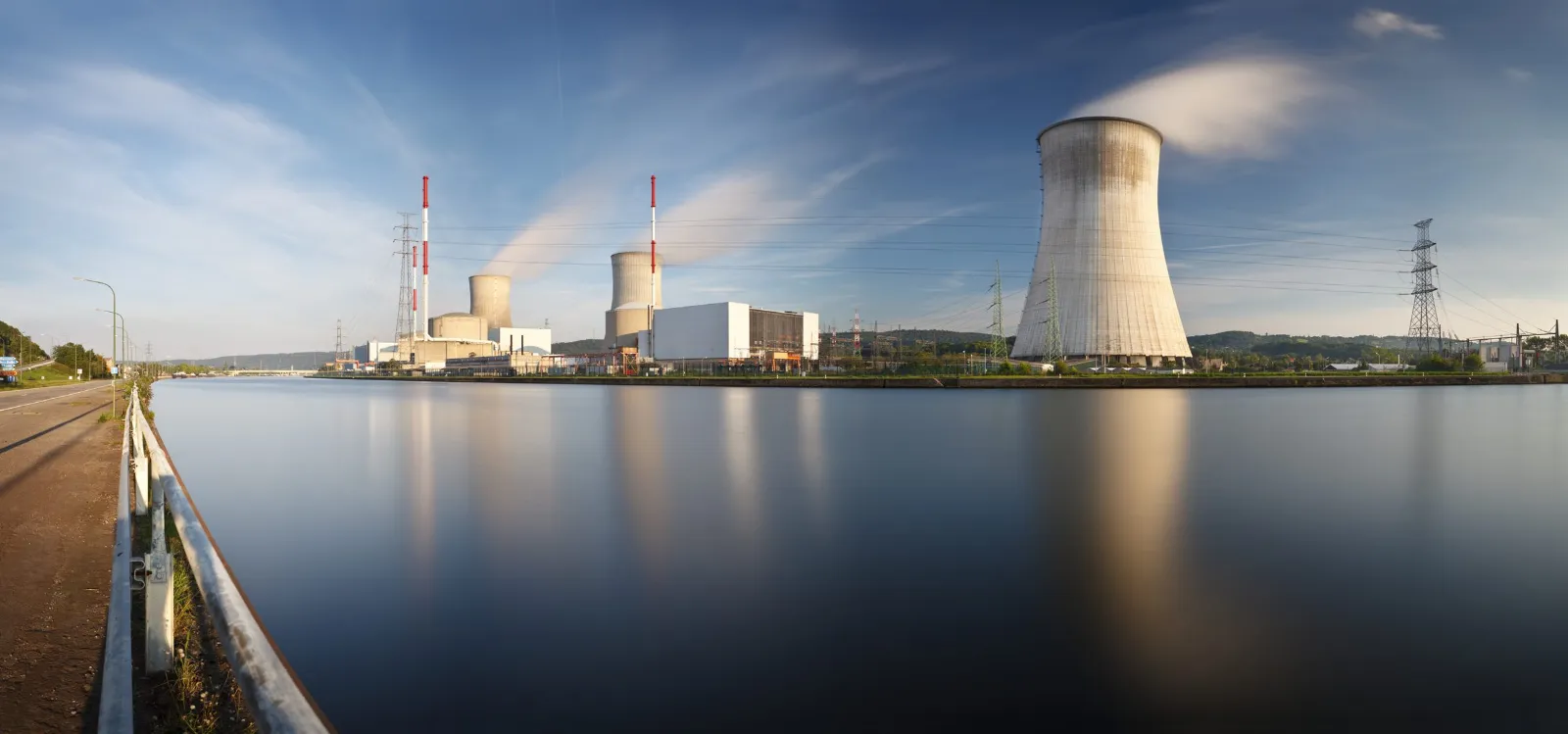
A Warsaw-based nuclear developer, SGE, wants to build 14 small modular reactors on three UK sites, with first power in 2034. On 24 November 2026 its UK company, SGE SMR UK, held a supply chain event in Birmingham with reactor maker GE Vernova Hitachi Nuclear Energy and builder Samsung C&T. SGE says over 200 UK companies attended. The plan would add about 4.2GW of nuclear power and cost around £35 billion. Nothing is approved yet.
The cold hard facts
- What: 14 GE Vernova Hitachi BWRX-300 reactors of 300MW each, on three multi-unit sites.
- Capacity: about 4.2GW in total. SGE says that would meet “around 11% of current UK consumption, equivalent to powering eight million homes for 60-80 years”.
- Cost: about £35 billion, which SGE says would be privately led. On our own maths, that is roughly £8.3 million per megawatt of capacity.
- Where: SGE says the first site would hold six reactors, followed by two further multi-unit sites. New Civil Engineer reported in July 2026 that the first site named was Oldbury-on-Severn in Gloucestershire, and that the other two had not been revealed.
- When: first power targeted for 2034.
- Jobs: SGE hasn’t given a jobs figure. It says opportunities would span nuclear and civil engineering, manufacturing, welding and fabrication, electrical and control systems, project delivery and logistics.
- Who: SGE, GE Vernova Hitachi Nuclear Energy, Samsung C&T, Laing O’Rourke, Aecon, Fermi Development and Etara. In October 2026 SGE signed a letter of intent with Origin Nuclear, part of Ontario Power Generation, to run the fleet.
The timeline so far
- July 2026: SGE submitted its proposal to the Department for Energy Security and Net Zero under the Advanced Nuclear Framework. Nuclear Engineering International called it “Britain’s largest privately-led nuclear investment”.
- 22 October 2026: letter of intent signed with Origin Nuclear to set up a UK operating company.
- 24 November 2026: Birmingham supply chain event. SGE says the proposal “has progressed to the Preliminary Regulatory Assessment Deep Dive”, and it expects to open a UK office with local staff by the end of 2026.
- Next: New Civil Engineer reported in July that SGE hoped to enter the Advanced Nuclear Pipeline in November 2026, then complete site selection and support negotiations in the first half of 2027. SGE says its full supply and delivery plan should be finalised in 2027.
- 2034: first power, if everything goes to plan.
How it would be paid for
Nuclear Engineering International reports that the £35 billion would be privately financed and that a Contract for Difference arrangement “means there will be no cost to UK taxpayers during construction”. It says SGE’s strategy relies on the National Wealth Fund acting as a cornerstone investor to help bring in private banks.
The same report says Google Cloud is a partner on data infrastructure, “including an adjacent proposal for up to £4.5bn in co-located data centres”.
Why a fleet?
SGE’s pitch is repetition. Chief executive Rafał Kasprów said: “Our ambition is not simply to build individual reactors, but to establish a fleet programme that can be delivered repeatedly and efficiently in the UK.”
The first BWRX-300 is under construction at Darlington in Ontario, Canada, where four are planned. New Civil Engineer reported in July that Darlington is expected to be operational in 2030.
The questions worth asking
- What will the power cost? No strike price has been published. Under a Contract for Difference, the gap between that price and the market price is paid through the CfD levy that suppliers pay.
- Will the government back it? The proposal is still in assessment, and the reports say government support negotiations come in 2027.
- Where are the other two sites? Not yet named in any source we read.
- How does this fit with Sizewell C? We looked at the large-reactor route in A Nuclear Renaissance: Why Sizewell C Is a Turning Point for UK Energy.
What does this mean for your business?
- Nuclear is long-term supply, and it carries a levy. Our take: 4.2GW of steady power from 2034 would help keep prices lower over the long run, but if it is paid for through a Contract for Difference, part of that cost lands on every electricity bill. We covered how the CfD levy works on 23 November 2026 in BICS funding: CfD levy cut on all bills from April 2027. Ask us to show you what levies make up your bill today.
- Engineering and manufacturing firms, plan your energy for growth. SGE says the work would span fabrication, welding, electrical systems and logistics. If your business is gearing up for big infrastructure contracts, your energy use will grow too. Talk to us about budgeting for it.
- Sort the contract early. 2034 is a long way off, and your next renewal isn’t. Arrange your business electricity contract as far ahead as you can, so you’re choosing with time on your side.
Talk to our energy experts
Want to know what levies and network costs are in your electricity bill? Book an appointment with our team, get a quote, or call us on 01273 914000.