
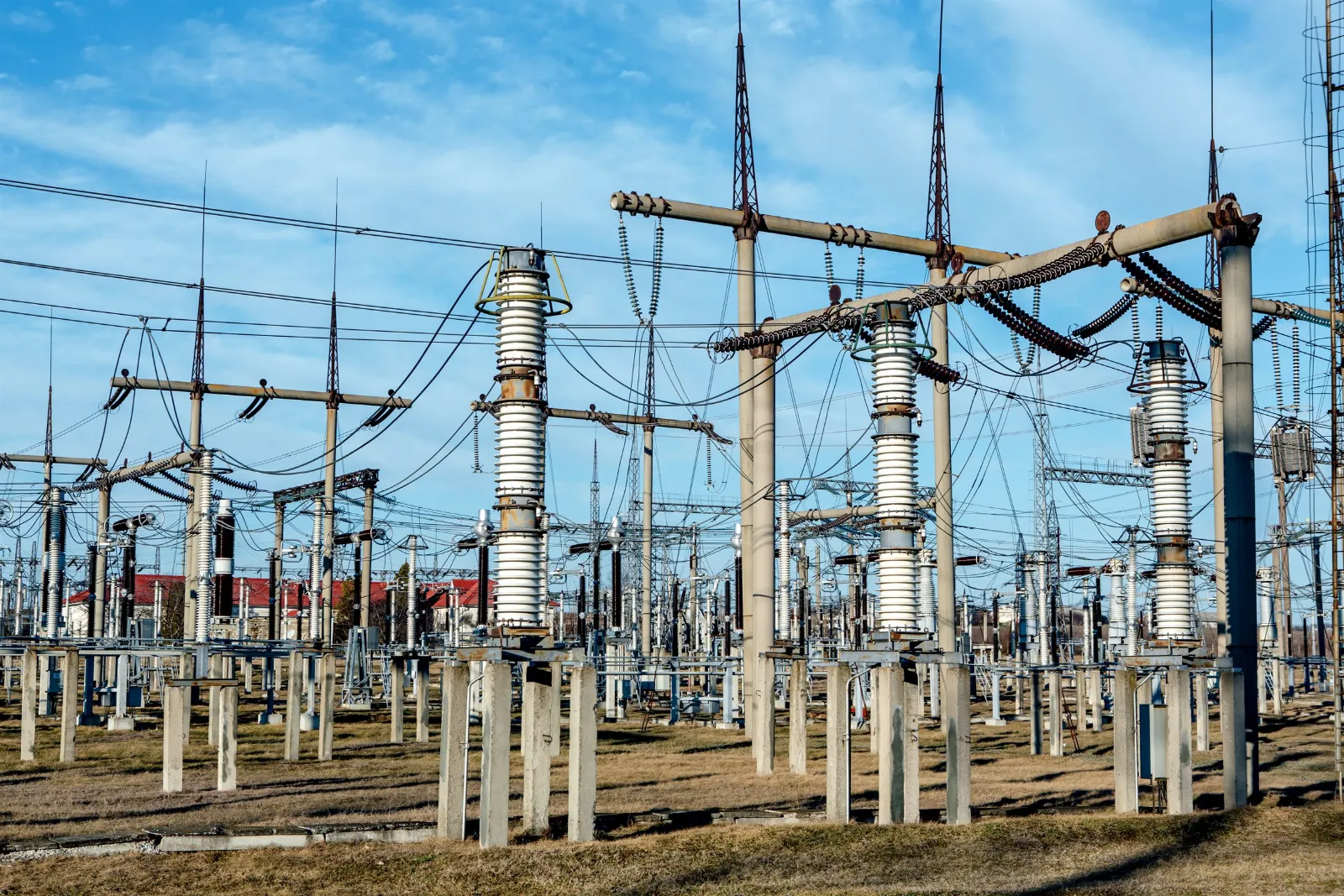
Government guidance telling Ofgem to help more of the money spent on Britain’s electricity grid reach UK manufacturers and suppliers came into force on Tuesday 17 November 2026. The Energy Secretary issued it, and Ofgem must by law “have regard” to it when it regulates the companies that own the wires. The guidance says in its own words that this “may come with a short-term cost trade-off”. No charge on your bill changes today. Network costs are already in what you pay, and we can show you which of them your contract fixes.
The facts
- Who: the Secretary of State for Energy Security and Net Zero, to the Gas and Electricity Markets Authority. That is the governing body of Ofgem, the energy regulator for Great Britain.
- What: “social and environmental guidance”, issued under section 3B of the Electricity Act 1989. The Act says Ofgem “shall, in carrying out its functions” have regard to it.
- When: first published on 14 September 2026. In force from 17 November 2026.
- Who it covers: Ofgem’s decisions that affect how network companies buy equipment and services. That means the Transmission Owners, who own the high-voltage grid, and the Distribution Network Operators, who own the local networks that deliver power to your premises. Smaller independent network companies “may choose to voluntarily align”.
- How long it lasts: until the government issues a new Strategy and Policy Statement for energy, or revokes or replaces the guidance.
- Cost: the guidance puts no figure on what it could add to network spending, or to bills.
What does it ask Ofgem to do?
The government says three things should follow from building out the grid. In the guidance’s words, “more investment, contracts, and work should flow to UK businesses”. It also wants stronger supply chains at home and long-term jobs in specific places and regions.
To get there, it asks Ofgem to:
- Support a “social value weighting” when networks buy. That is the share of the marks in a tender given to things like jobs and skills. The government “maintains that a 10% minimum social value weighting for electricity networks is an important lever for delivering growth”. It is voluntary, and the government says it is still discussing it with the network owners. It would welcome work towards 20% “as a longer-term ambition”. Central government’s own rule, issued in August 2026, applies 20% to its contracts worth more than £5 million.
- Accept that a UK supplier winning can be good for customers. Ofgem “should actively recognise that domestic firms winning contracts can be good for consumers” where having the capability here lowers the expected cost of delivering reliable infrastructure across the whole system.
- Encourage final assembly in the UK. Ofgem should consider an approach in which “final UK assembly” and support for the domestic supply chain are “directly encouraged”.
- Write guidance for network owners on how they can show social value, supply chain resilience and growth when they buy.
Who checks it happens?
The government asks Ofgem to discuss progress with senior officials or ministers every three months, and to publish a written update once a year. That reporting may include how much network owners spend with UK suppliers and how much with overseas ones.
Ofgem should also explain how it will manage the trade-offs between this guidance and its main duty, which is to protect the interests of existing and future consumers. The guidance says that explanation should be “published by the new year”.
Why now?
The government calls electricity networks “essential enablers for whole economy growth”. The guidance points to the scale of public backing already in place: the National Wealth Fund has lent £600 million to Iberdrola and ScottishPower and given an £800 million guarantee to SSEN Transmission. On our own maths, that is £1.4 billion of state-backed support named in this one document.
The government says wider changes to Ofgem’s legal framework will follow, but that “it is essential to act now”.
The questions worth asking
We welcome investment in the grid. A network that can carry more homegrown power keeps prices lower over the long term. The guidance itself describes that investment as “funded by billpayers”, which is why these questions matter:
- How big is the “short-term cost trade-off”? The guidance names it and doesn’t measure it.
- Who decides when UK capability is worth a higher price? The government says Ofgem, as the independent regulator, “is best placed to balance its own decision making”.
- Will it slow the building? The guidance says social value must be applied in a way that is proportionate and doesn’t create barriers for suppliers. It doesn’t say what happens if UK factories can’t deliver in time.
- Does 10% stay voluntary? For now it is a discussion with the network owners, with their response due in a sector growth plan the guidance describes as forthcoming.
What does this mean for your business?
- Your bill doesn’t change today. The guidance changes what Ofgem has to weigh. It doesn’t set or change any charge.
- Network costs are already part of what you pay. They sit in your standing charge and unit rates. Our guide to non-commodity costs shows where, and our piece on TNUoS and rising standing charges explains the transmission part.
- Know which of those costs your contract fixes. Some contracts fix network charges for the term and some pass changes through to you. Send us your contract and we’ll tell you which you have, before your next renewal and not after it. When it’s time, we compare business electricity prices from suitable suppliers on both kinds.
- If you make or supply equipment for the networks, the direction is set: the government wants more of this work placed with UK firms, and wants evidence on jobs and skills to count when network owners buy.
- We’ll report Ofgem’s answer. Its explanation of the trade-offs is due by the new year.
For an example of what network companies are doing with local capacity now, see our story on the West Midlands programme for manufacturers.
Talk to our energy experts
Want to know which charges your contract fixes and which it passes through? Book an appointment with our Energy Team, get a quote, or call us on 01273 914000.