
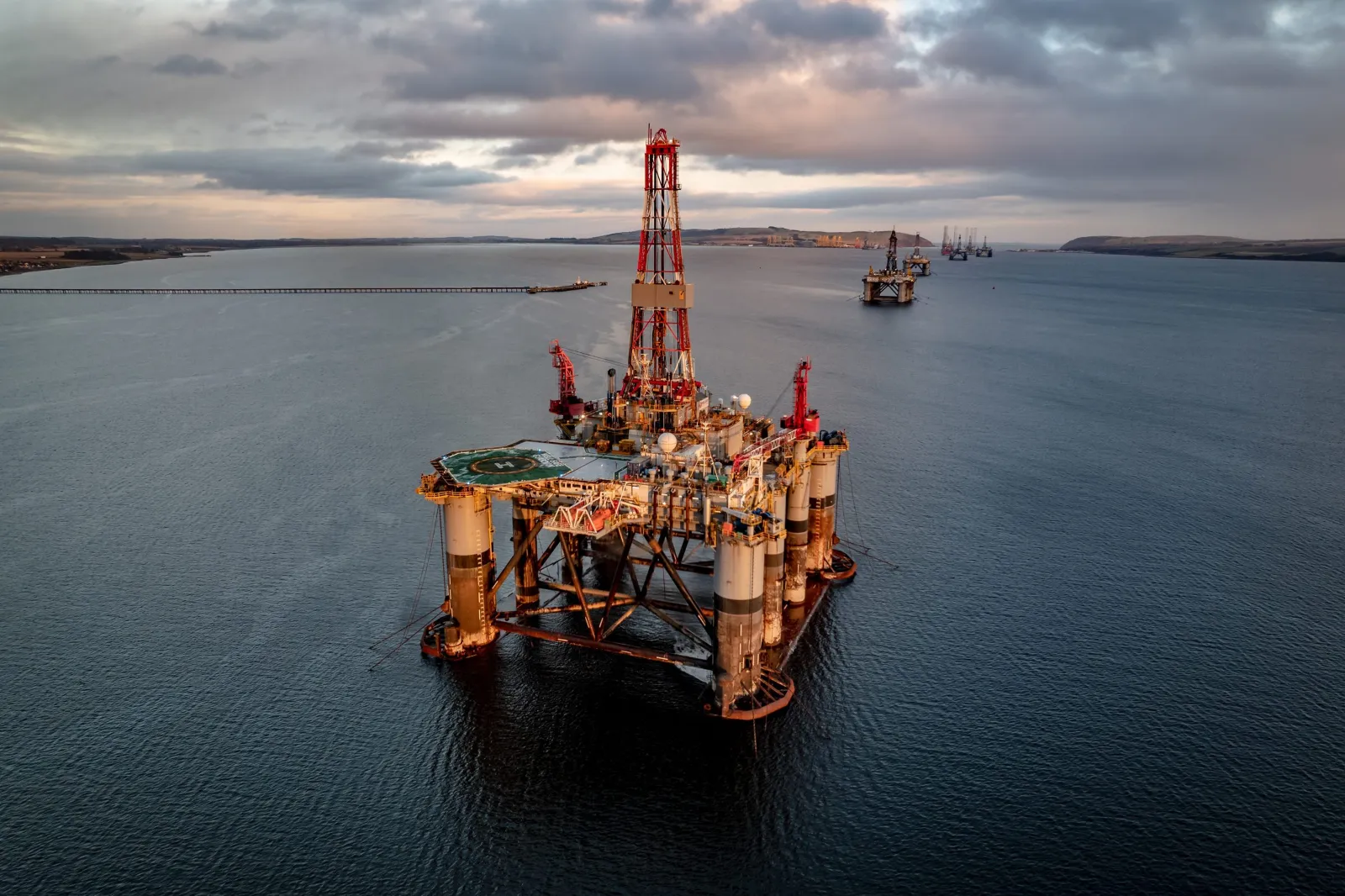
EnQuest, one of the UK’s biggest oil and gas producers, is leaving the North Sea. On Wednesday 18 November 2026 it said it had agreed to sell its UK exploration and production business to Neo Next+ for up to 960 million US dollars (£729 million) and will put its money into south-east Asia. On the reports this is the sale of a working business, not a closure, and nothing in the announcement changes a gas or electricity price. Our take: it is one more sign of where North Sea investment is heading, and that matters to anyone who buys gas.
The facts
- Who is selling: EnQuest, a UK energy company. Its chief executive is Amjad Bseisu.
- What: its UK upstream business, meaning its North Sea exploration and production.
- Who is buying: Neo Next+, headquartered in Aberdeen.
- Price: up to 960 million US dollars, which the Press Association puts at £729 million.
- Where EnQuest goes next: south-east Asia, where it has recently bought assets in Malaysia.
- Why, in its own words: it is moving from a “high-tax, low-return basin into a high-growth region that is structurally short on energy”.
- Jobs: the reports give no figure for the sale. EnQuest said in July that it planned to cut about 30 jobs at the Sullom Voe Terminal in Shetland, which it has run since December 2017.
- When the sale completes: not stated in the reports we read.
Why EnQuest says it is going
The company said its exit reflects a shift away from Britain “in response to an uncertain investment environment within the UK”. The BBC reported that the decision “followed uncertainty over investment and tax rises in recent years”.
Mr Bseisu said the sale “positions our high-quality south-east Asian portfolio at the core of EnQuest, where we see compelling opportunities to invest, build scale and create long-term shareholder value”. He said the business left behind “will have a materially lower cost base and significantly enhanced balance sheet strength”.
It isn’t the only one
- BP put its North Sea assets up for sale in the summer after 60 years of production.
- Other firms “have either sold, merged or reduced activity”, the BBC reported.
- The buyer is itself a merger. Neo Next+ was formed in March from the UK North Sea assets of TotalEnergies, Repsol and HitecVision.
So this deal is a change of owner. The reports don’t describe any field closing because of it.
The political row
Shadow energy secretary Andrew Bowie called it “devastating news” and accused the government of “hanging a ‘closed for business’ sign over the North Sea”. He said: “Abolish the windfall tax. Scrap the ban on licences and get Britain drilling.”
A government spokesperson said: “The North Sea remains a vital national asset. Oil and gas will continue to play an important role in our energy system for decades to come.” On tax, the spokesperson pointed to “plans to replace the Energy Profits Levy when it ends by 2030, or earlier if its price floor is triggered”.
Two other decisions sit in the background. Gas started flowing from the Jackdaw field days before EnQuest’s announcement, which we covered on 16 November 2026 in Jackdaw gas field starts supplying Britain. And the government has yet to decide on Rosebank, the North Sea’s largest undeveloped oil field.
The other North Sea number out today
On Tuesday 24 November 2026 the industry body Offshore Energies UK published its forecast for decommissioning, reported by The Independent. It shows how much of the basin’s work is now taking things apart.
- Total: £24.7 billion from 2026 to 2035.
- Peak year: £3.08 billion in 2027, staying at £2.74 billion or more each year to 2031.
- What has to come out: 135 topsides, which are the structures you can see above the water, 126 underwater structures and 1,834 wells on the UK Continental Shelf.
- This year: 220 wells, up from 137 in 2025, and 161 kilometres of pipeline, up from 33.5 kilometres.
- On our own maths: £24.7 billion is about 34 times what Neo Next+ is paying for EnQuest’s UK business.
Mark Wilson of Offshore Energies UK called it “a major industrial opportunity for the UK” and warned that decommissioning and offshore wind “increasingly need the same people, vessels, ports and engineering expertise”.
The questions worth asking
- Does less North Sea investment mean dearer gas? None of the reports says so, and we won’t guess. The question is how much gas Britain produces itself in the 2030s and how much it has to buy in.
- What replaces the Energy Profits Levy? The government says it has plans. The reports don’t describe them.
- What happens at Sullom Voe? The reports don’t say what the sale means for the terminal or its staff.
- Will Rosebank go ahead? Undecided.
What does this mean for your business?
- This is a change of owner, not a cut in supply. We looked at how secure Britain’s gas supply is on 18 November 2026 in Gas supply secure into the 2030s, with one risk.
- Watch the direction of travel. Our take: producers selling up and a £24.7 billion bill for taking platforms apart both point the same way, towards a North Sea that produces less over time. That is a reason to know exactly how your gas is priced and when your contract ends.
- Fix the things you can control. You can’t change North Sea tax policy. You can choose when you agree your next gas price. Arrange it as far ahead as you can, and we’ll put business gas prices from suitable suppliers in front of you to compare.
- Send us your contract end date. Tell us when your gas and electricity contracts finish and we’ll go through your options with you, so the timing is your decision.
Talk to our energy experts
Want your gas price agreed well ahead, whatever happens offshore? Book an appointment with our Energy Team, get a quote, or call us on 01273 914000.