
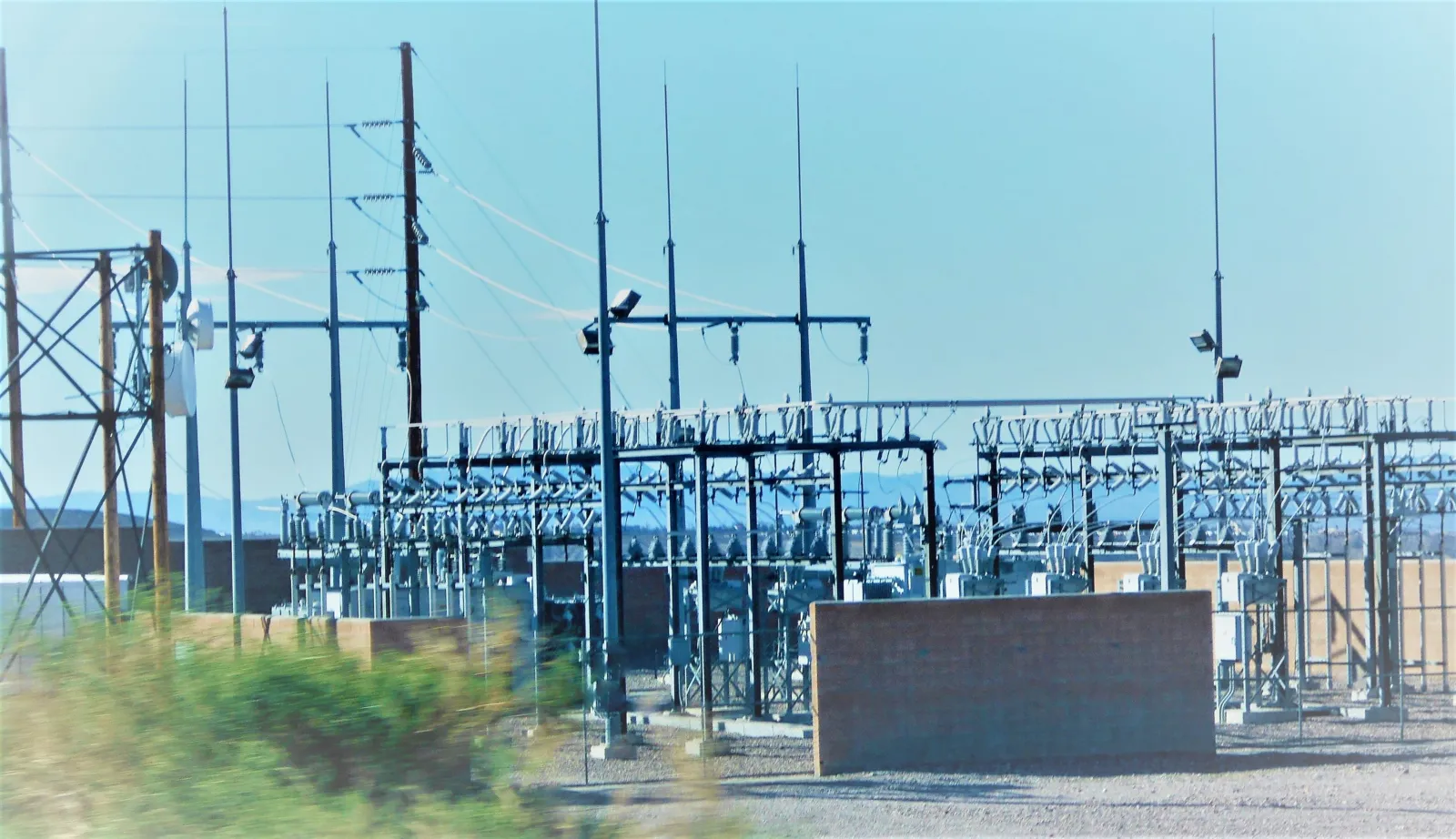
Scottish ministers gave planning permission for two large electricity substations on Wednesday 18 November 2026, overturning refusals by Highland Council and Aberdeenshire Council. Both belong to SSEN Transmission, the company that owns the high-voltage grid in the north of Scotland. They are the Carnaig substation near Bonar Bridge in Sutherland and the Hurlie substation in Fetteresso Forest near Stonehaven. Neither decision changes a charge on your bill today. Grid building like this is paid for through the network charges in every business electricity bill, and we can show you where those sit in yours.
The facts
- Who: SSEN Transmission applied. Scottish ministers decided, after appeals handled by the Scottish Government’s Planning and Environmental Appeals Division.
- What: two 400 kilovolt (kV) substations. A substation doesn’t generate power. It switches electricity and changes its voltage as it moves through the grid.
- Carnaig: next to the existing 275kV Loch Buidhe substation, about six miles north-east of Bonar Bridge. The Northern Times reports it has been likened in size to 24 football pitches.
- Hurlie: in Fetteresso Forest, three miles west of Stonehaven.
- Build time: about five years for Carnaig, from breaking ground to full operation, the Northern Times reports.
- Conditions: Planning Geek, which reports the official appeal records, says the Carnaig permission comes with 34 conditions.
- Cost: none of the sources gives a cost for either substation. SSEN Transmission says both are part of its £29 billion investment programme across the north of Scotland.
Why had the councils refused?
Carnaig. Highland Council’s north planning committee voted 9 to 5 to refuse it in December 2025, against the advice of its own planning officers. The BBC reports councillors heard the build would mean hundreds of vehicle movements each week near a primary school. A community council member told the meeting the area would become an “industrial wasteland”. The Northern Times reports there were 49 objections.
Hurlie. Aberdeenshire councillors tied in their vote, and the committee chairman used his casting vote to refuse. The BBC reports he was concerned the substation would “drastically” change the landscape. Planning Geek reports the council received 2,318 representations, of which 2,308 were objections, plus a petition of 1,140 signatures. On our own maths, that is more than 99% against.
In both cases the council’s planning officers had recommended approval.
Why did ministers approve them?
SSEN Transmission appealed in February 2026. Planning Geek reports that ministers took both cases for their own decision on 25 March 2026 because they raised matters of national importance, and that in each case ministers followed the recommendation of the government planning reporter who examined it.
On Carnaig, the Northern Times quotes the decision notice. Ministers accepted there would be “likely significant landscape and visual effects” while it is built and in its early years. They agreed with the reporter that those effects “would be temporary until proposed mitigation planting becomes established” and “localised in extent”.
On Hurlie, Planning Geek reports ministers agreed the visual effects would be significant but would be seen from very few places.
What does SSEN Transmission say?
Alison Hall, its director of development, called the decisions “an important milestone for these nationally significant projects”. She said: “Carnaig and Hurlie will alleviate existing constraints on the grid, help to connect Scotland’s abundant renewable energy resources, strengthen our energy security and support the transition to a cleaner and more affordable electricity system.”
A constraint is a point where the grid can’t carry all the power that could flow through it.
The company says its £29 billion programme will support up to 10,000 jobs in the north of Scotland and 24,000 across Scotland. Project Scotland reports the company’s own analysis that planned transmission investment could support around 2,940 jobs in the Highlands and around 2,700 in Aberdeenshire.
What happens next?
- A legal challenge is possible. Planning Geek reports that anyone aggrieved by the decisions has six weeks from 18 November 2026 to apply to the Court of Session.
- The pylon line isn’t decided. Carnaig is part of the proposed Spittal to Beauly 400kV overhead line. The Northern Times reports that line drew more than 2,300 objections and is going to a public local inquiry.
- Work has to start within five years for each permission to stand, Planning Geek reports.
The questions worth asking
We welcome grid investment, and the company’s case is that these two sites ease constraints and connect more renewable power. These decisions still leave questions:
- What will the two substations cost? No figure has been published for either. £29 billion is the whole programme.
- How much say do local councils have on national grid projects? Two elected committees said no and ministers said yes.
- Will the overhead line be approved too? Carnaig was designed as part of it.
- When do the constraints actually ease? Carnaig alone is about five years of building away.
What does this mean for your business?
- Your bill doesn’t change because of these decisions. No charge was set or altered.
- You do pay for the grid. Transmission costs reach every business through network charges, wherever in Britain you are. Our piece on TNUoS and rising standing charges explains that part of the bill, and our guide to non-commodity costs shows the rest.
- Find out how your contract treats those charges. Some contracts fix them for the term and some pass changes on. Send us your contract and we’ll tell you which you have. When your renewal is coming up, we compare business electricity prices from suitable suppliers on both kinds.
- More is being built in the north of Scotland. We’ve also covered the start of work on the Lewis Hub link to the Western Isles and the approval of the Peterhead gas power station.
Talk to our energy experts
Want to see how much of your electricity bill is network charges? Book an appointment with our Energy Team, get a quote, or call us on 01273 914000.