
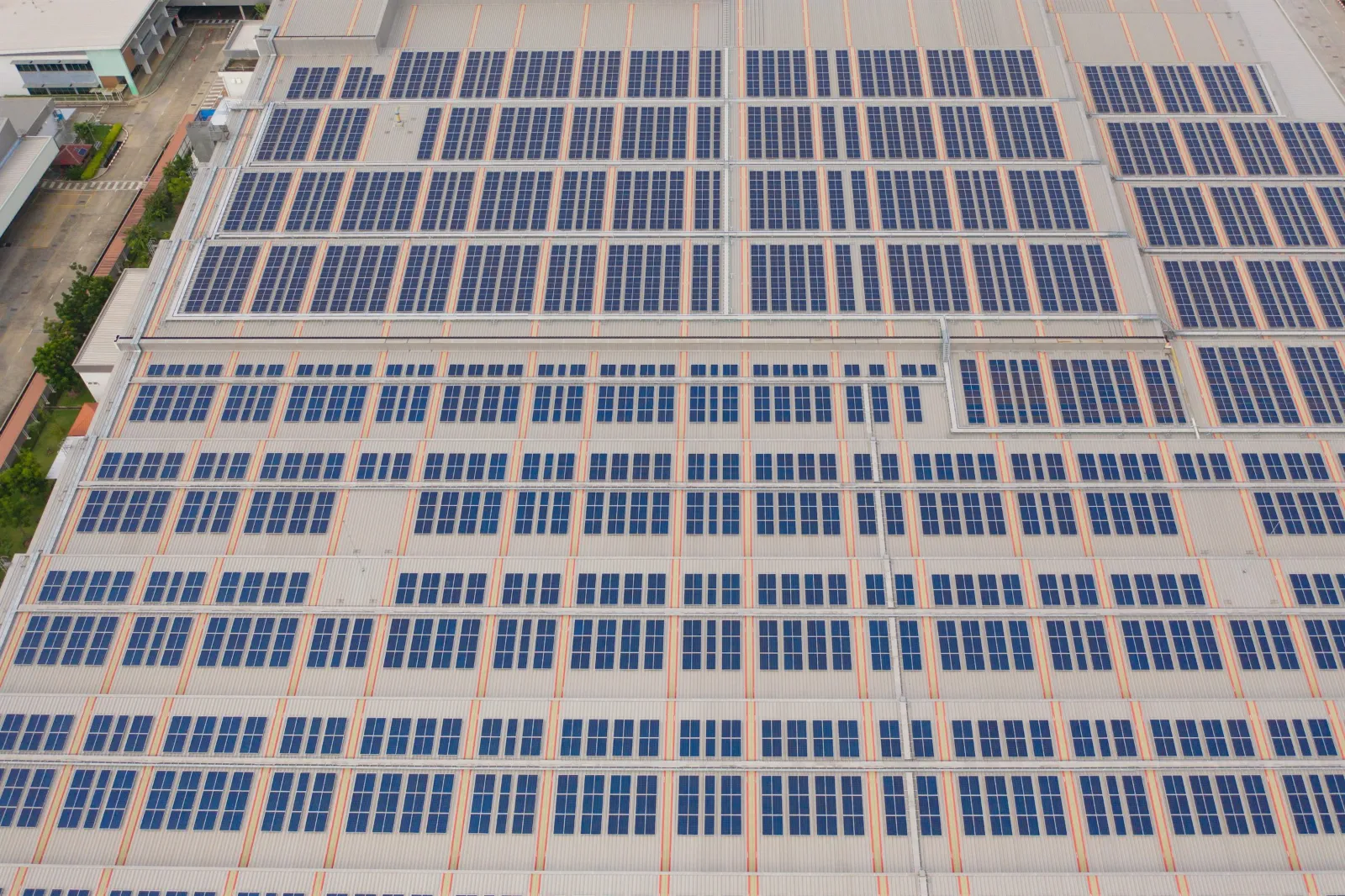
More than 270,000 rooftop solar systems have been fitted across the UK in 2026, the most in any year, the government said on Friday 20 November 2026. The figure comes from MCS, the body that certifies small installations, and the record was passed with more than a month of the year left. The announcement names shops, factories, stadiums and a wholesale market among the businesses that have put panels up. Solar cuts what you buy from the grid, but you still need a supply contract for the rest, and that is where we come in.
The facts
- Who: the Department for Energy Security and Net Zero (DESNZ), using data from MCS.
- How many: over 270,000 installations in 2026 so far. It is the first time a year has passed that mark.
- What is counted: MCS-certified installations of up to 50 kilowatts (kW). That covers homes and smaller business roofs. Bigger commercial arrays are outside the figure.
- Homes or businesses: the announcement doesn’t split the 270,000 between the two.
- What comes next: DESNZ says its own official data confirming the record will be published in December.
- By the end of the year: Chris Hewett, Chief Executive of Solar Energy UK, said it looks like more than 300,000 MCS-certified installations will be completed.
The businesses named
The announcement lists what organisations have fitted, with the figures each has given.
Shops and markets
- Lincolnshire Co-op: panels at 53 sites over two years. The retailer says solar can provide around 12% of a site’s electricity demand.
- New Spitalfields Market: 2,730 panels on the wholesale food market, which the City of London Corporation describes as London’s largest rooftop solar installation.
Warehouses and factories
- Aldi: 19,000 panels at its new £500 million distribution centre in Leicestershire, “capable of powering the entire site at peak generation”.
- Wren Kitchens & Bedrooms: installing more than 13,000 additional panels at its Lincolnshire headquarters, expected to meet around 23% of the site’s electricity needs.
Sports grounds and leisure
- Principality Stadium, Cardiff: more than 3,250 panels switched on in 2026, enough to power more than 50 matchdays a year.
- Ascot Racecourse: more than 1,200 panels, expected to meet around 9% of its yearly electricity needs.
- Lincoln City: panels and battery storage at its football stadium.
- Redbourn Leisure Centre, Hertfordshire: rooftop solar and battery storage expected to cut its electricity costs by 61%, saving more than £19,000 a year. On our own maths that puts its electricity bill at roughly £31,000 a year before the panels.
- Tottenham Hotspur: planning 3,800 panels on its stadium roof.
Beyond rooftops
- London Stansted: a newly operational solar farm with more than 24,000 panels supplying the airport directly.
How much of the bill does solar cover?
Look at the shares in that list. They run from around 9% at Ascot and 12% at a Lincolnshire Co-op site to 23% at Wren and 61% of costs at Redbourn, which also has a battery. Aldi’s figure is for peak generation, not the whole year.
So for most of the businesses named, the larger part of their electricity still comes from the grid.
What the government and the industry say
Energy Secretary Miatta Fahnbulleh said: “Britain’s rooftops are powering a solar revolution.” She added that every panel installed “means homegrown clean power we control”.
Lisa Cooke, Managing Director of MCS, said: “for the sixth consecutive year, the annual record for total MCS certified installations has been broken, with solar and battery leading the way”. She also said MCS has redeveloped its installer scheme, “putting quality at the heart of everything we do”.
Mr Hewett of Solar Energy UK pointed to “rules effectively mandating solar for new homes and buildings entering into force”.
The questions worth asking
- How many of the 270,000 are businesses? The announcement doesn’t say.
- What did these systems cost, and how long until they pay back? Only Redbourn’s saving is given. No installation costs or payback periods are in the announcement.
- What about roofs over 50kW? The MCS figure stops there, so the biggest commercial arrays aren’t in the record at all.
- Can the grid take the power? The announcement says nothing about connecting systems or exporting spare electricity. We reported on 19 November 2026 that Ofgem has opened an inquiry into grid connection delays.
- What is left on the bill? The announcement doesn’t cover the charges on the electricity a site still buys. A forecast published on 16 November 2026 said network charges will pass 40% of the average business bill by 2030.
What does this mean for your business?
- Thinking about panels? Start with your own usage. How much solar saves depends on how much electricity you use in daylight. Send us a year of bills or half-hourly data and we’ll show you when you use your power. Our solar power for business page explains how we help.
- Your supply contract has to fit the panels. Once you generate some of your own electricity, you buy less. Tell us before you install, and we’ll read your contract for any terms tied to how much you use.
- Don’t leave the rest of the bill to chance. Even the best figures above leave a business buying a large share from the grid. We compare business electricity prices from suitable suppliers. Arrange the contract as far ahead of your end date as you can, with or without panels.
- Already have solar? Send us a recent bill and we’ll check your current deal still suits how much you now buy.
We’ve written before about rooftop solar and cheaper bills. We’ll report the official DESNZ figures when they’re published in December.
Talk to our energy experts
Want to see whether solar adds up for your site? Book an appointment with our Energy Team, get a quote, or call us on 01273 914000.